The gap between an emergency occurring and someone responding to it is the most consequential variable in how it ends. An hour matters. A day matters enormously. A vacant apartment left with an active water infiltration for a week will sustain damage that multiplies the complexity and cost of the eventual resolution by orders of magnitude.
This page covers what a genuine emergency property assistance service in Paris involves: the four categories of property emergency that arise most frequently in Parisian buildings, the immediate steps that need to happen in each case, and what it means to have someone already authorised and already familiar with your property in place before an emergency occurs.
For owners who want to understand the broader property management context within which emergency response sits, the simplifying the management of your property page provides a complete overview.
The Four Categories of Property Emergency in Paris
Water: the most frequent and most time-sensitive
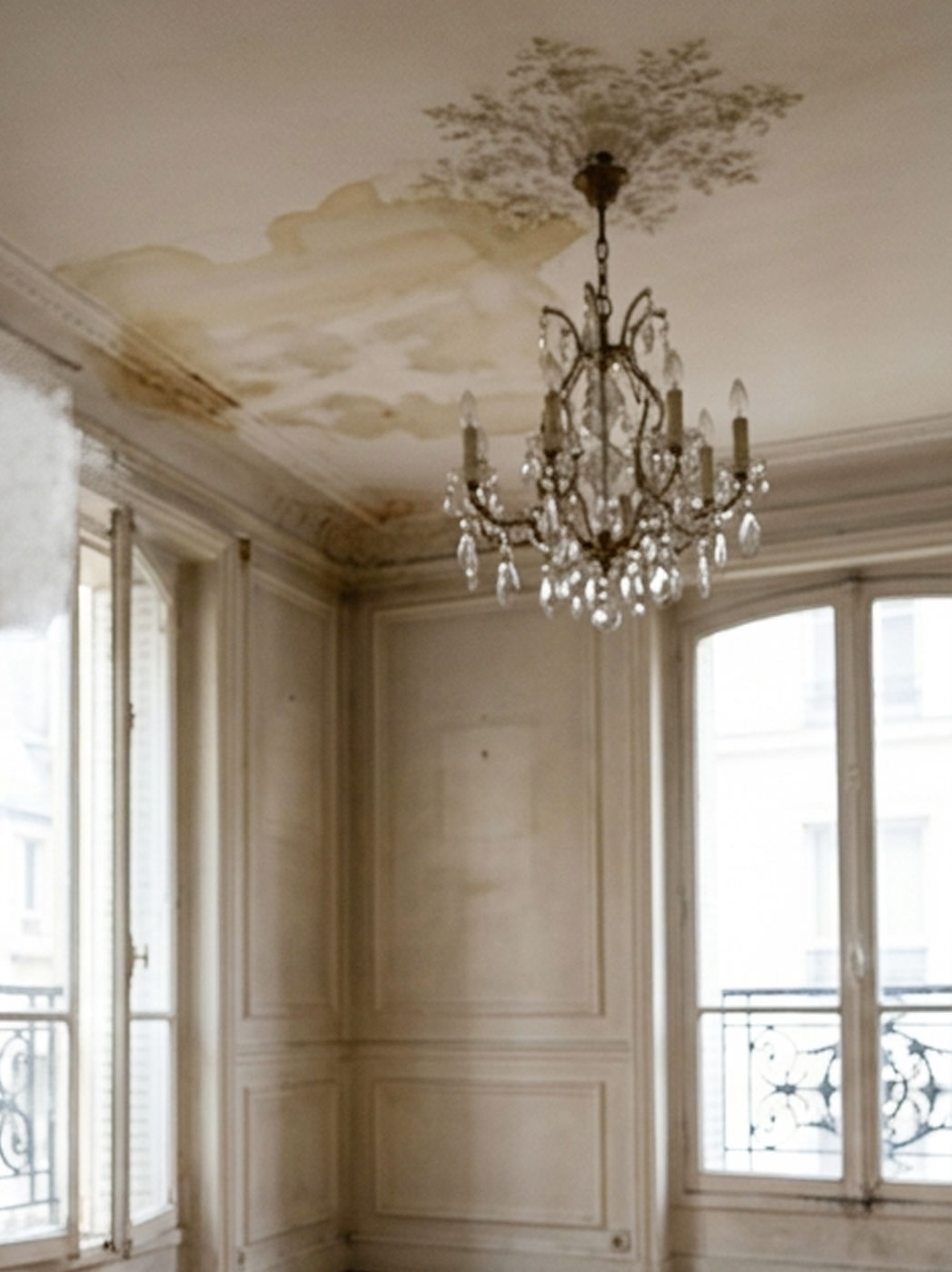
Water damage — dégâts des eaux — is the most common property emergency in Parisian apartment buildings, and the one where the gap between a fast response and a slow one produces the most dramatically different outcomes. A burst pipe, an overflowing bathtub in the apartment above, a roof joint that has failed during heavy rain, a washing machine connection that has given way: the source varies, but the immediate requirement is the same. The water must be stopped, the damage must be contained, and the responsible parties must be identified and notified before any further action.
In a Parisian co-ownership, water damage almost always involves multiple parties: the owner of the apartment where the damage originated, the owner of the apartment that has been damaged, and in many cases the co-ownership itself if shared infrastructure is involved. The French insurance system has a specific convention — the IRSI, formerly the CIDRE — that governs how claims between insurers are handled in these situations. Navigating this correctly requires someone on-site who can assess the source, document the damage, and engage the right parties in the right order.
Water damage is covered in detail on the dedicated page on water damage management in Paris. The team's claim assistance service — from initial site visit through to restoration completion — is described on the assistance in the event of a claim page.
Electrical: faults, failures, and safety
Electrical emergencies range from a tripped circuit breaker that has left the apartment without power — a genuine problem in winter when heating systems may stop — to a more serious fault that poses a fire or electrocution risk. For a non-resident owner, an apartment without power is initially invisible: there is no one there to notice, and the first indication may be a failed security system alarm or a freezer that has defrosted.
The immediate response to a suspected electrical fault requires a qualified electrician — not a handyman, and not the building's gardien acting informally. The work must be carried out by a certified professional, and any significant electrical work must be accompanied by a consuel certification confirming the installation's compliance. A management team with established relationships with qualified Paris electricians can mobilise the right professional within hours rather than days.

Security incidents: break-ins, forced entry, and damaged access
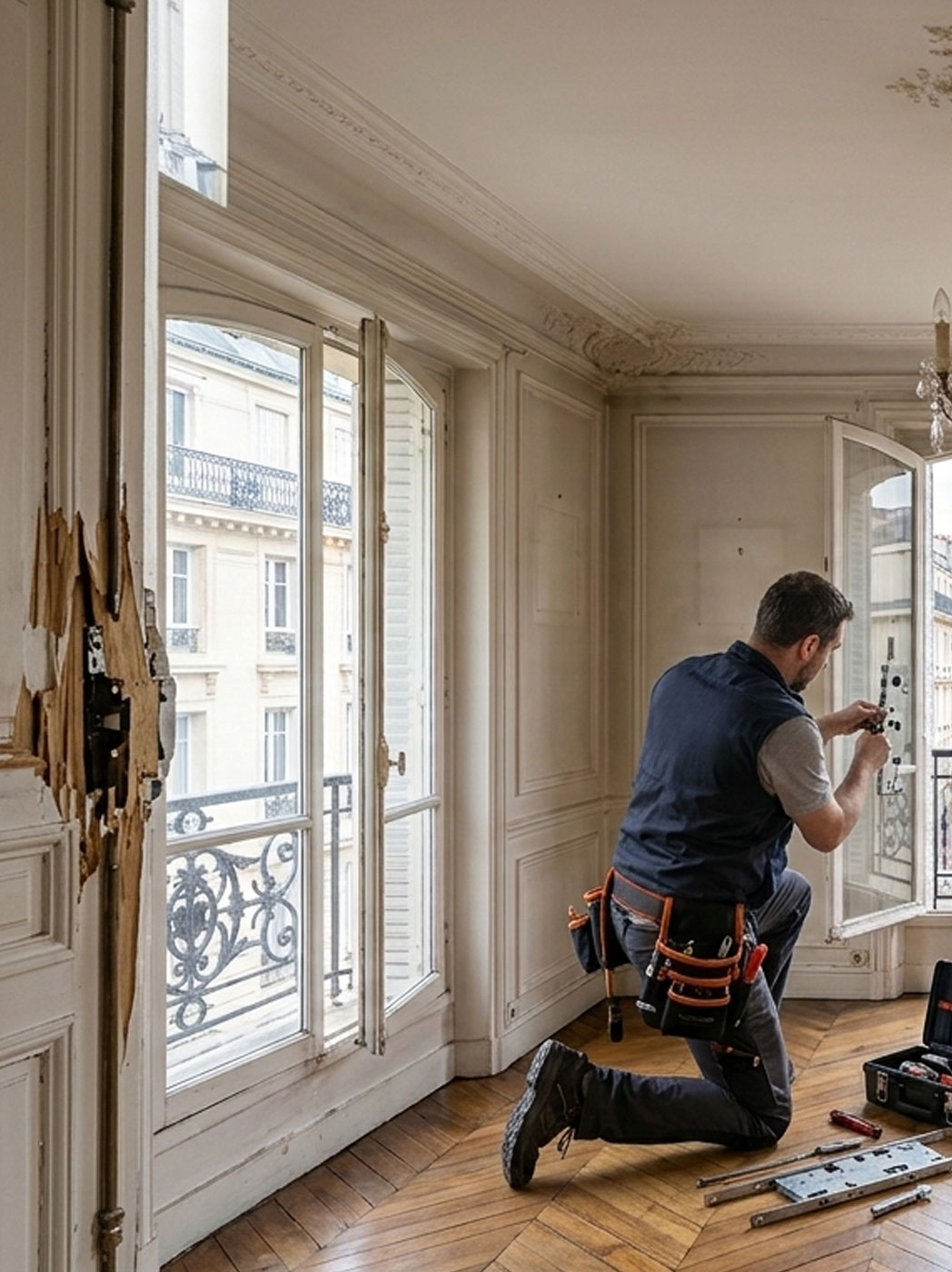
A break-in at a Paris apartment creates two simultaneous problems: the immediate security of the property, and the investigation and insurance claim that follow. A door that has been forced open and left unable to close securely must be made secure before anything else — regardless of what has been taken, an apartment that cannot be locked is an ongoing vulnerability. This requires a serrurier, a locksmith, on-site immediately.
The sequence after securing the property is: notify the police (for an official complaint — main courante or plainte — that the insurer will require), document the scene photographically before anything is touched, notify the insurer within the timeframes set by the policy, and engage the appropriate trades for any structural repair to the door, frame, or lock. Each of these steps has a correct order and a correct professional, and doing them in the wrong order creates complications that are unnecessary.
Structural: cracks, ceiling collapses, and building alerts
Structural emergencies in Paris apartments are less common than water or electrical incidents but more alarming when they occur. A ceiling that shows signs of imminent collapse, a crack in a load-bearing wall that has appeared suddenly, or a notification from the syndic about a structural concern in the building's common areas: each of these requires an assessment by a qualified structural professional before any other work is commissioned.
The responsibility for structural issues in a Parisian co-ownership depends on where the problem originates. Issues within the private lot are the owner's responsibility. Issues in the building's structure — load-bearing walls, the slab between floors, the roof structure — are the co-ownership's responsibility. Issues in the zone between private and common — where the owner's interior meets a shared wall — can be contested. Establishing responsibility correctly before instructing any work avoids the risk of paying for repairs that are someone else's obligation.
The Emergency Response Sequence: What Happens and When
| Stage | What the Team Does |
|---|---|
| Immediate notification | Owner is notified with first available information — source of alert, initial assessment, photographs if accessible |
| On-site attendance | Team attends the property as quickly as the situation requires — same day for water and security, within hours for electrical |
| Initial assessment | Source and extent of damage assessed; immediate containment measures taken if within the team's capacity (turning off water at stopcock, calling emergency services if required) |
| Professional mobilisation | Appropriate trade engaged — plumber, electrician, locksmith, structural engineer — from the team's established network |
| Documentation | Photographs, written account of damage, and any relevant documentation gathered for insurance purposes |
| Party notification | Syndic, neighbouring owners, and the owner's insurer notified as required by the situation and by the insurer's policy terms |
| Owner briefing | Clear English-language account of the situation provided to the owner: what happened, what has been done, what decisions are pending |
| Follow-through | Ongoing coordination until the emergency is resolved: works supervised, completion confirmed, outcome reported |
The Insurance Declaration: Getting It Right Under Pressure
In France, insurance policies specify timeframes within which claims must be declared. For most property damage, the declaration must be made within five working days of the damage being discovered. For theft and break-ins, the timeframe is typically shorter — often 48 hours. Missing these deadlines can jeopardise coverage. For a non-resident owner who discovers a problem when a neighbour's email arrives, that five-day clock is already running.
The initial declaration to the insurer must describe the event clearly, include a reference to the relevant policy clause, and indicate the extent of the known damage. Supporting documentation — photographs, the syndic's account if the building is involved, the police complaint number in the case of a break-in — strengthens the declaration. A team that has already attended the site, already documented the damage, and already established the sequence of events can produce this declaration accurately and within the required timeframe.
A non-resident owner who receives news of a water infiltration on a Friday evening, processes it over the weekend, and calls a Paris plumber on Monday morning may already have missed the optimal declaration window. A local team that attends the same day and notifies the insurer the same evening has protected the owner's claim position from the outset.
The Constat Amiable and Its Role in Water Damage Claims
When water damage involves an identifiable neighbour as the source, French insurance practice involves a document called the constat amiable de dégât des eaux — a jointly signed declaration by the owner of the affected apartment and the owner of the source apartment. This document, when properly completed and signed by both parties, initiates the insurance process between the two insurers.
Completing a constat amiable requires physical access to both apartments and the cooperation of both parties — which in practice means someone physically present who can knock on the neighbour's door, explain the situation, and complete the form jointly. A non-resident owner without local representation relies on the neighbour's initiative or the syndic's goodwill for this to happen. A management team that attends the scene immediately can complete this formality correctly before either party's insurer is formally involved.
Frequently asked questions
The questions below address the emergency response concerns most commonly raised by non-resident Paris property owners. Further guidance is available on the frequently asked questions page.
What constitutes a property emergency requiring immediate response?
Any event that poses a risk of ongoing or escalating damage to the property, risk to neighbouring properties, or risk to the building’s security. Active water infiltration, electrical faults that have triggered protective systems, break-ins or forced entry, and structural alerts from the building are all situations that require same-day response. A maintenance issue that is inconvenient but not actively worsening can generally wait for a scheduled visit; anything that is actively deteriorating cannot.
How quickly can the team reach my apartment in an emergency?
For genuine emergencies — active water, electrical failure, security breach — the team aims to be on-site the same day. The specific response time depends on where the property is located within Paris, the time of day, and the nature of the situation. For situations requiring emergency services — fire, flooding requiring the fire brigade, gas leaks — the appropriate emergency services are called first.
What if I cannot be reached when an emergency occurs?
The management arrangement establishes in advance what the team is authorised to do without the owner’s prior approval. For genuine emergencies, this typically includes calling the appropriate emergency tradespeople, taking immediate protective action (shutting off water at the stopcock, for example), and notifying the insurer within the required timeframe. The owner is notified as soon as they can be reached, with a full account of what happened and what was done. Nothing is concealed, and no action beyond what the situation clearly required is taken autonomously.
Does my insurance cover water damage from a neighbour's apartment?
This depends on the specific policies involved and the cause of the damage. The French IRSI convention governs how insurers handle claims between co-owners in a shared building: below certain damage thresholds, each owner’s insurer covers their own client’s damage without seeking recovery from the other party’s insurer; above those thresholds, responsibility is determined by the cause and a recovery process applies. The specifics — what your policy covers, what your neighbour’s policy covers, and how the IRSI applies — should be verified with your insurer. The key practical point is that the declaration must be made within the policy’s timeframes and with correct documentation.
What happens after the emergency is resolved?
After immediate containment, the process moves into claims management: working with your insurer’s expert, coordinating the restoration works, and confirming that the property has been returned to its pre-damage condition. This is a distinct phase from the emergency response itself and may take weeks or months depending on the extent of damage.
The questions below address the emergency response concerns most commonly raised by non-resident Paris property owners. Further guidance is available on the frequently asked questions page.
What constitutes a property emergency requiring immediate response?
Any event that poses a risk of ongoing or escalating damage to the property, risk to neighbouring properties, or risk to the building’s security. Active water infiltration, electrical faults that have triggered protective systems, break-ins or forced entry, and structural alerts from the building are all situations that require same-day response. A maintenance issue that is inconvenient but not actively worsening can generally wait for a scheduled visit; anything that is actively deteriorating cannot.
How quickly can the team reach my apartment in an emergency?
For genuine emergencies — active water, electrical failure, security breach — the team aims to be on-site the same day. The specific response time depends on where the property is located within Paris, the time of day, and the nature of the situation. For situations requiring emergency services — fire, flooding requiring the fire brigade, gas leaks — the appropriate emergency services are called first.
What if I cannot be reached when an emergency occurs?
The management arrangement establishes in advance what the team is authorised to do without the owner’s prior approval. For genuine emergencies, this typically includes calling the appropriate emergency tradespeople, taking immediate protective action (shutting off water at the stopcock, for example), and notifying the insurer within the required timeframe. The owner is notified as soon as they can be reached, with a full account of what happened and what was done. Nothing is concealed, and no action beyond what the situation clearly required is taken autonomously.
Does my insurance cover water damage from a neighbour's apartment?
This depends on the specific policies involved and the cause of the damage. The French IRSI convention governs how insurers handle claims between co-owners in a shared building: below certain damage thresholds, each owner’s insurer covers their own client’s damage without seeking recovery from the other party’s insurer; above those thresholds, responsibility is determined by the cause and a recovery process applies. The specifics — what your policy covers, what your neighbour’s policy covers, and how the IRSI applies — should be verified with your insurer. The key practical point is that the declaration must be made within the policy’s timeframes and with correct documentation.
What happens after the emergency is resolved?
After immediate containment, the process moves into claims management: working with your insurer’s expert, coordinating the restoration works, and confirming that the property has been returned to its pre-damage condition. This is a distinct phase from the emergency response itself and may take weeks or months depending on the extent of damage.
Let's stay connected
Contact your agent
Real Estate Caretaking supports you every step of the way: searching, purchasing, rental management, or monitoring your second home.
A tailor-made solution for investing or living in Paris with complete peace of mind.
- +33 (0) 6 79 99 69 76
- martinehillion@gmail.com