

Maintenance is the part of property ownership that gets the least attention until it becomes the most urgent. A building whose systems are serviced regularly, whose minor issues are addressed as they appear, and whose fabric is kept in good repair has a fundamentally different trajectory from one where maintenance is deferred until something fails conspicuously.
The cost difference between these two approaches, measured over ten years of non-resident ownership, is substantial. For owners based abroad, the maintenance challenge is structural: they cannot observe the property's condition in the ordinary way that an occupant would, cannot be present when a tradesperson needs access, and cannot follow up on work without a local representative to do it on their behalf.
This page addresses what a professional maintenance programme for a Paris apartment actually involves — what must be done, what should be done proactively, what is the owner's obligation versus the co-ownership's, and what the legal requirements are that apply regardless of the property's occupancy.The Legal Maintenance Obligations That Apply to All Paris Apartment Owners
Some maintenance obligations are not optional. French law and co-ownership rules impose specific requirements on property owners, and the consequences of non-compliance range from administrative penalties to insurance coverage complications to co-ownership disputes.
Annual boiler and heating system servicing
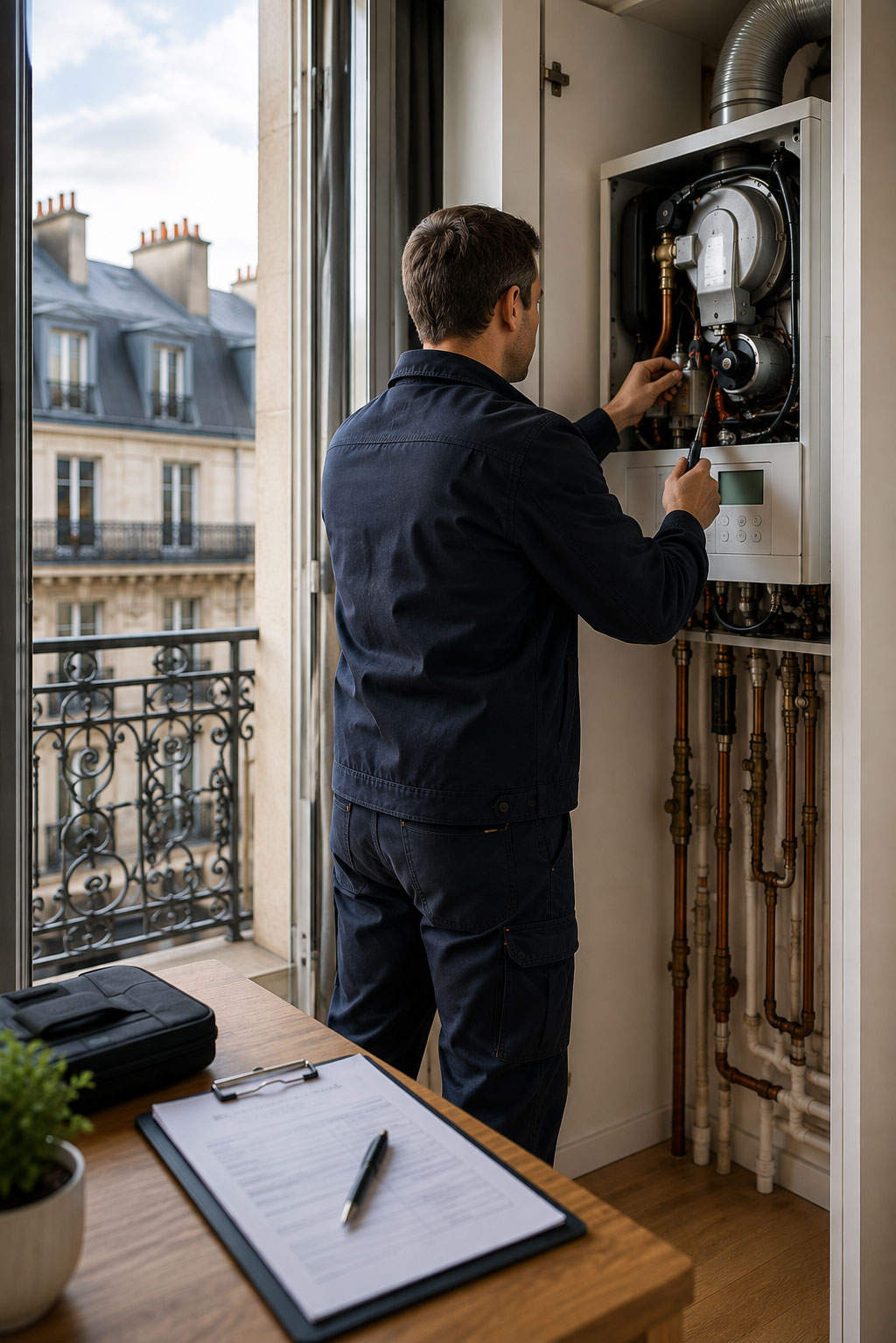
If the apartment has individual gas heating — a gas boiler serving the apartment’s own radiators or underfloor system — French law requires an annual service by a qualified professional. This obligation applies regardless of whether the apartment is occupied. The service must be carried out by a certified technician and documented with a service report. Failure to maintain this obligation can affect the validity of the property’s gas safety compliance and may have implications for insurance coverage in the event of an incident.
For apartments connected to a collective heating system managed by the co-ownership, the maintenance obligation for the central boiler falls on the co-ownership, not the individual owner. However, the individual connections within the private apartment — radiators, underfloor heating circuits, individual thermostats — remain the owner’s responsibility.
Chimney sweeping (ramonage)
For apartments with a functional fireplace or a wood-burning stove connected to a flue, annual chimney sweeping is required by French regulation and is typically mandated by the insurer as a condition of coverage. The sweep must be carried out by a professional and documented. An insurer who discovers that a chimney fire occurred in an apartment whose flue had not been swept within the required period may contest coverage. For non-resident owners who use a fireplace only occasionally, this obligation is easy to overlook — and easy to fulfil with a local representative who coordinates it annually.
Clim and ventilation system maintenance
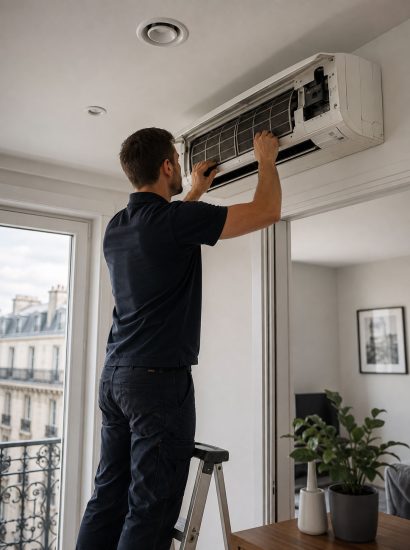
Air conditioning systems — split units, reversible heat pumps — require periodic maintenance to function efficiently and to comply with French environmental regulations governing refrigerant-containing systems. Ventilation systems (VMC — ventilation mécanique contrôlée) require filter cleaning and periodic verification that air flows meet the specified rates. Blocked or dirty ventilation creates humidity accumulation problems that damage finishes and create health risks. These systems are invisible until they fail, which makes scheduled maintenance the only reliable approach.
Co-ownership obligations that affect the private apartment
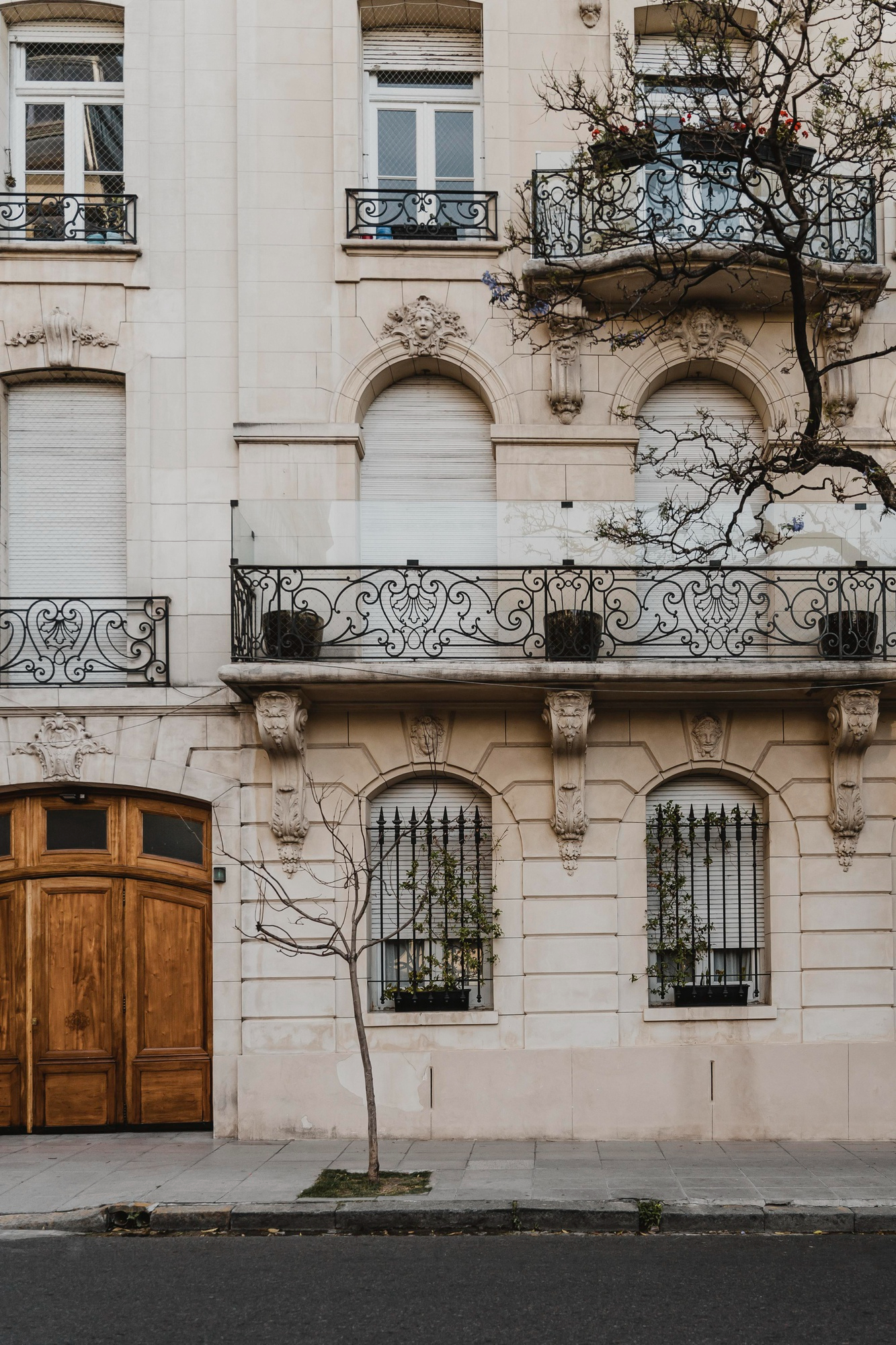
The co-ownership’s maintenance programme covers the building’s common areas — the structure, the roof, the facade, the shared systems. But some co-ownership decisions create obligations for individual owners: a vote to replace the building’s windows with double-glazing, for example, may require each owner to update their private shutters to match the new profile within a specified period. A co-ownership decision to install collective insulation may create an obligation to modify each apartment’s individual heating connections.
Monitoring the co-ownership’s decisions — attending assemblies, reading the minutes, understanding what has been voted and what obligations this creates — is a core function of the management team’s relations with the condominium service.
Preventive Maintenance: What Should Be Done Before Things Fail
Preventive maintenance — servicing and inspecting systems before they fail, rather than replacing them after they have — reduces the overall cost of property upkeep and eliminates the category of emergency that results from a predictable failure that was not addressed in time.

Plumbing: the slow risks
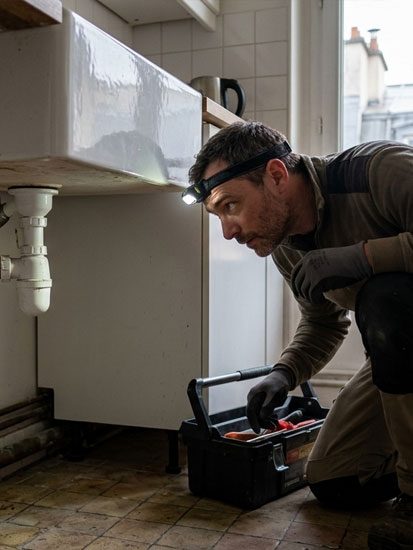
Plumbing failures in Paris apartments most commonly result not from dramatic pipe bursts but from the slow deterioration of joints, seals, and connection fittings. A washing machine hose that is seven years old and has never been inspected. A flexible hose under the kitchen sink that has stiffened over time and will eventually crack. A toilet cistern flap that drips so quietly that no one notices until the water bill arrives. Each of these is detectable during a routine inspection and addressable for a small cost. Each becomes a more significant problem — or an emergency — if left until it fails.
For older Paris buildings with original or partially original plumbing, the risk profile is higher. Lead pipes in pre-war buildings, cast-iron drainage in older structures, shared risers that have never been replaced: these are not emergencies in waiting, but they are systems whose condition warrants active monitoring and periodic professional assessment.
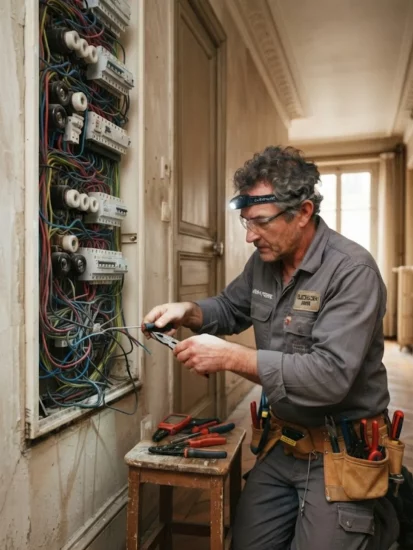
Electrical: compliance and safety
The mandatory electrical diagnostic (diagnostic électrique) required for sale gives a point-in-time assessment of the installation’s compliance. Between sales, the electrical installation ages and the standard it was compliant with when it was last assessed may not reflect current regulations. For non-resident owners who have made additions to the installation — added sockets, installed new lighting, connected new appliances — verification that these additions are properly earthed and protected is a basic safety measure.
Periodic testing of the earth leakage circuit breaker (disjoncteur différentiel) — the device that cuts power if a fault develops — takes minutes and provides confirmation that the most important protective device in the installation is functioning. This is a check that can be done during a routine property inspection.
Windows and joinery: the seasonal maintenance cycle
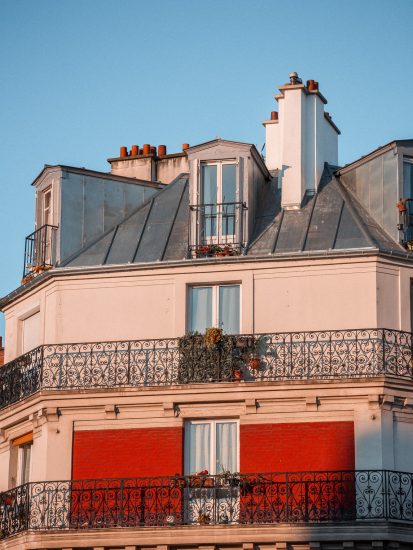
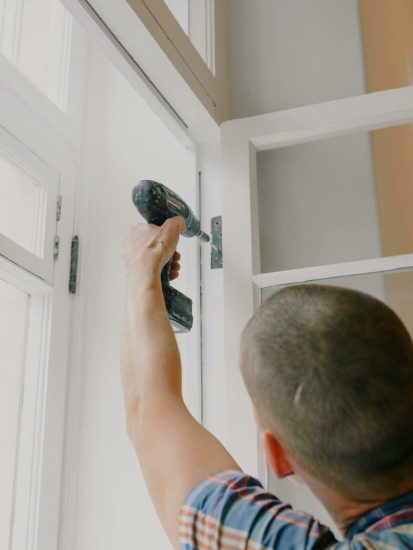
Haussmannian windows, wooden shutters, and traditional French doors operate on a seasonal cycle of expansion and contraction as temperature and humidity change through the year. The joints and seals that make these elements weatherproof deteriorate over time and need periodic renewal. A window that has been painted shut, a shutter that no longer fits its recess, a French door whose threshold seal has crumbled: each of these allows moisture and cold to penetrate and accelerates the deterioration of the surrounding materials.
Annual inspection and servicing of joinery — tightening hinges, renewing silicone seals, adjusting strike plates, treating exposed woodwork — extends the service life of these elements significantly and prevents the more expensive interventions that become necessary when they are left unattended. In buildings subject to heritage protections, maintaining original joinery in good repair is preferable to allowing it to deteriorate to the point where replacement becomes unavoidable.
Corrective Maintenance: Managing Repairs When They Are Needed
The artisan selection problem
For a non-resident owner, finding a reliable artisan for a repair job in Paris is harder than it should be. The standard online search produces a long list of companies whose quality, availability, and reliability are impossible to assess without prior experience. Established Parisian artisans who do good work are typically fully committed to their existing client relationships and not actively seeking new work through directories.
A management team with years of active presence in the Paris property market has developed working relationships with artisans across the relevant trades: plumbers who respond to calls and arrive when they say they will, electricians who work to current standards and document their work properly, painters who understand the specific finishes required in period apartments, carpenters who can repair period joinery without destroying its character. These relationships cannot be assembled on demand — they are the result of repeated commissions and consistent professional engagement.
Quotes, authorisation, and sign-off
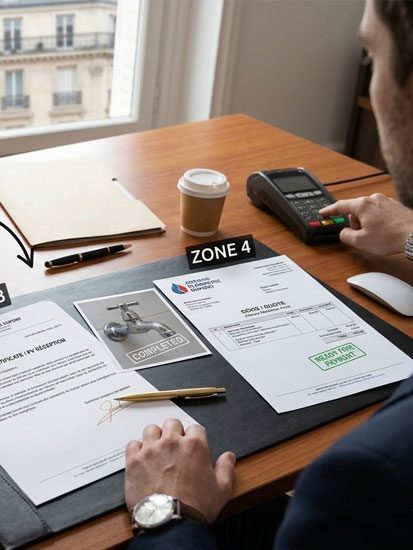
The correct process for a maintenance repair involves a quote before the work begins, the owner’s authorisation, the work itself, and a sign-off confirming completion before the invoice is approved. For a non-resident owner managing this remotely, the process works as follows: the management team identifies the issue and the appropriate trade, obtains a quote and presents it to the owner with a recommendation, receives the owner’s approval, coordinates access for the artisan, supervises the work, and confirms completion before approving payment.
The threshold for autonomous action — below which the team can commission minor repairs without seeking prior approval — is agreed at the outset. This ensures that a dripping tap is fixed promptly without requiring a transatlantic exchange of messages, while a more significant repair or replacement is always the subject of explicit owner approval.
Maintenance records and their value
A property whose maintenance history is documented — service reports for the boiler and air conditioning, records of electrical work and certifications, written accounts of repairs with the artisans’ details — is a better-protected asset than one whose history exists only in memory. At the time of a sale, a well-maintained property with documented service history demonstrates to buyers that the asset has been properly looked after. In insurance claims, maintenance records support the owner’s position. In disputes about responsibility for damage, records showing when systems were last serviced and in what condition are material evidence.
Frequently asked questions
What maintenance is legally required for a Paris apartment?
The main legally mandated maintenance obligations for individual apartment owners include annual servicing of individual gas boilers, annual chimney sweeping where a functional flue is present, and periodic maintenance of air conditioning systems containing refrigerants above a threshold charge weight. Co-ownership rules may add further obligations specific to the building. Insurance policies typically impose maintenance conditions as a requirement for coverage — failure to maintain a system in working order can affect coverage in the event of a related incident. Consult a qualified professional for the obligations specific to your property and its systems.
What is the difference between maintenance that is my responsibility and maintenance that is the co-ownership's?
As a general principle under French co-ownership law, the individual owner is responsible for maintaining everything within their private lot — the interior of the apartment, its private systems, and the elements serving the apartment exclusively. The co-ownership is responsible for the building’s common areas and shared infrastructure — the structure, the roof, the shared pipes in common areas, the building’s mechanical systems. The boundary between private and common is defined by the co-ownership’s règlement and is not always where owners assume. For any specific question about whether a particular element is private or common, the règlement de copropriété and, if necessary, a notaire’s advice are the definitive sources.
How do I find reliable artisans for maintenance work in Paris?
Through established local relationships rather than online directories. Artisans who consistently do good work in central Paris are typically introduced through networks of property managers, architects, and building administrators who know them through repeated engagement. A management team with years of active presence in the Paris property market has these relationships in place. For an owner without local management, the most reliable approach is a personal recommendation from someone who has used the artisan recently for comparable work.
How often should I have my Paris apartment serviced if it is not regularly occupied?
The legally mandatory obligations apply regardless of occupancy. Beyond these, a property that is not regularly occupied benefits from more proactive maintenance monitoring than one that is occupied, because the informal surveillance that an occupant provides — noticing a dripping tap, hearing a boiler make a new sound, feeling that a window no longer closes properly — is absent. Annual service visits covering all mechanical systems, periodic inspection of joinery and seals, and regular property inspections are the appropriate baseline for a vacant property.
What maintenance is legally required for a Paris apartment?
The main legally mandated maintenance obligations for individual apartment owners include annual servicing of individual gas boilers, annual chimney sweeping where a functional flue is present, and periodic maintenance of air conditioning systems containing refrigerants above a threshold charge weight. Co-ownership rules may add further obligations specific to the building. Insurance policies typically impose maintenance conditions as a requirement for coverage — failure to maintain a system in working order can affect coverage in the event of a related incident. Consult a qualified professional for the obligations specific to your property and its systems.
What is the difference between maintenance that is my responsibility and maintenance that is the co-ownership's?
As a general principle under French co-ownership law, the individual owner is responsible for maintaining everything within their private lot — the interior of the apartment, its private systems, and the elements serving the apartment exclusively. The co-ownership is responsible for the building’s common areas and shared infrastructure — the structure, the roof, the shared pipes in common areas, the building’s mechanical systems. The boundary between private and common is defined by the co-ownership’s règlement and is not always where owners assume. For any specific question about whether a particular element is private or common, the règlement de copropriété and, if necessary, a notaire’s advice are the definitive sources.
How do I find reliable artisans for maintenance work in Paris?
Through established local relationships rather than online directories. Artisans who consistently do good work in central Paris are typically introduced through networks of property managers, architects, and building administrators who know them through repeated engagement. A management team with years of active presence in the Paris property market has these relationships in place. For an owner without local management, the most reliable approach is a personal recommendation from someone who has used the artisan recently for comparable work.
How often should I have my Paris apartment serviced if it is not regularly occupied?
The legally mandatory obligations apply regardless of occupancy. Beyond these, a property that is not regularly occupied benefits from more proactive maintenance monitoring than one that is occupied, because the informal surveillance that an occupant provides — noticing a dripping tap, hearing a boiler make a new sound, feeling that a window no longer closes properly — is absent. Annual service visits covering all mechanical systems, periodic inspection of joinery and seals, and regular property inspections are the appropriate baseline for a vacant property.
Let's stay connected
Contact your agent
Real Estate Caretaking supports you every step of the way: searching, purchasing, rental management, or monitoring your second home.
A tailor-made solution for investing or living in Paris with complete peace of mind.
- +33 (0) 6 79 99 69 76
- martinehillion@gmail.com