

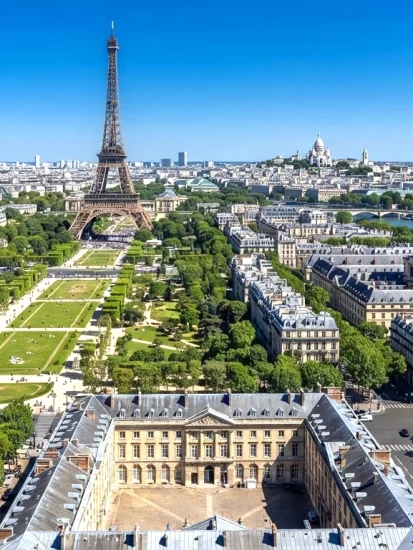
The 7th arrondissement is the largest of the central Left Bank arrondissements and one of the most varied in its management landscape. From the ministerial streets near the Assemblée Nationale to the family apartment buildings of the Gros-Caillou, from the grand addresses of the Rue de Varenne to the quieter residential blocks of the Saint-François-Xavier sector: the 7th contains more internal diversity than its uniform reputation as a prestige arrondissement suggests.
For foreign property owners, this diversity matters. A property on the Rue de l’Université near the Seine has different management considerations from one on the Rue de Sèvres near the Bon Marché. A grand apartment on the Rue de Varenne faces different co-ownership dynamics than a converted flat in a building near the Boulevard de Latour-Maubourg. Understanding where precisely your property sits within the arrondissement is the first step toward managing it appropriately.
The management considerations specific to the Eiffel Tower area — the Gros-Caillou sector, tourist density, the event calendar, view-property maintenance — are covered in detail on the property management near the Eiffel Tower page. This page focuses on the parts of the 7th that are further from the tower and carry a different management profile.
Beyond the Eiffel Tower
The Rue de Varenne / Rue de Grenelle corridor: ministerial Paris
The long streets that run east-west through the heart of the 7th — Rue de Varenne, Rue de Grenelle, Rue de Babylone — are among the most prestigious residential addresses in Paris. They are also the streets that run past the greatest concentration of ministries, government departments, and diplomatic missions in the city. The Hôtel Matignon, the prime minister’s residence, is on the Rue de Varenne. Multiple foreign embassies are within a few hundred metres.
For property management, this institutional concentration has a very specific consequence: security. The streets are patrolled more intensively than average, vehicles are subject to restrictions near certain addresses, and access for tradespeople and deliveries on certain days or during certain events is subject to protocols that do not apply in most other parts of Paris. A management team that regularly coordinates works in these streets understands this rhythm and plans around it. One that does not will encounter access complications that add delay and friction to straightforward maintenance tasks.
The co-ownership buildings in this corridor tend to be among the best-managed in the 7th. The owners are financially sophisticated, the syndics are professional, and the standard of building maintenance is high. For foreign owners, this means a generally reliable co-ownership environment — but one where the expectations of other co-owners for promptness, precision, and engagement are correspondingly elevated.
The Invalides / Saint-François-Xavier sector: residential quietude
Moving away from the Seine and the tourist circuits, the streets around the Esplanade des Invalides and toward the Saint-François-Xavier church take on a character that is genuinely residential in a way that few central Paris areas achieve. These are streets where Parisian families have lived for generations, where the buildings are well-maintained without being performatively so, and where the community of co-owners tends to know each other and take their building’s governance seriously.
For a foreign owner in this sector, the social dimension of co-ownership is more present than in buildings where ownership is more fragmented and transient. Decisions at general assemblies are discussed with genuine engagement. The syndic is accountable to a membership that pays attention. Works programmes are voted on and executed properly. This is a better co-ownership environment than many — but it also means that an absent owner who is never represented and never engaged becomes conspicuous in a way that they might not be in a larger, more anonymous building.
The artisan landscape in this sector is excellent. The combination of old, well-maintained buildings and financially capable owners has created a stable market for quality tradespeople. Relationships built over years of management presence produce faster access and more reliable work than cold calls to directory listings.
The Alma / Pont de l’Alma sector: riverside premium
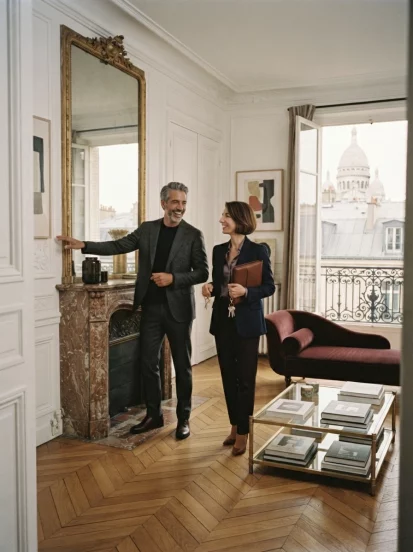
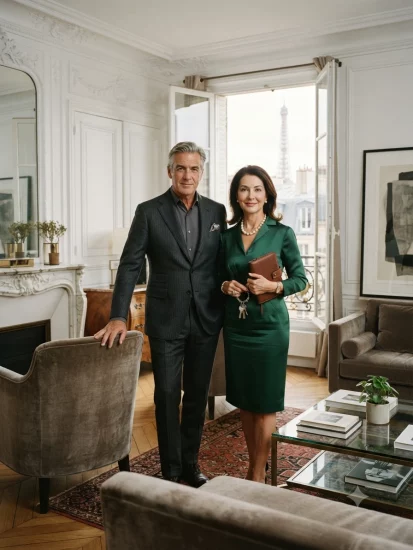
The streets closest to the river in the northwestern part of the 7th — Quai d’Orsay, Avenue Rapp, Rue de l’Université upper section — carry the Seine proximity premium that characterises the most expensive river-view addresses in Paris. Properties here command prices that reflect both the views and the direct riverside access, and the management of these properties needs to reflect the specific conditions that the river creates.
Moisture management is more active in this sector than anywhere else in the 7th. The Seine’s proximity affects the water table and the ground moisture conditions in ways that are felt in basement and cave spaces, in lower-floor apartments, and in the condition of building foundations. Properties on the quai itself face the additional challenge of traffic noise and vibration from the riverside road, which can affect windows and structural joints over time.
The ownership profile in this sector is strongly international — this is one of the parts of Paris that attracts the highest concentration of wealthy foreign buyers — which means that the management team’s experience with non-resident owners, multilingual communication, and distance management is directly relevant.
The Rue du Bac / Bon Marché sector: animated residential
The eastern part of the 7th — around the Rue du Bac, the Bon Marché department store, and toward the boundary with the 6th — has a more commercially active character than the arrondissement’s quieter western streets. The presence of the Bon Marché, the Conran Shop, and a concentration of design and antique shops creates pedestrian activity that affects buildings on key streets.
The building stock in this sector is mixed — some excellent Haussmannian buildings alongside more modest constructions from various periods. Co-ownership quality varies correspondingly, and the due diligence required before purchasing in this sector is, as in the Odéon sector of the 6th, more important than in buildings with more uniform ownership profiles.
Property Management in the 7th Arrondissement: At a Glance
The table below maps the key management characteristics of the 7th arrondissement’s main sectors for foreign owners.
| Topic | Details |
|---|---|
| Arrondissement | 7th (Varenne-Grenelle, Invalides, Alma-riverside, Rue du Bac sectors) |
| Primary building stock | Predominantly Haussmannian; some grand immeuble de rapport; ministerial mansions converted to flats |
| Co-ownership profile | High quality in Varenne-Grenelle and Invalides sectors; more variable in Rue du Bac sector |
| Institutional character | Ministry and embassy presence affects access protocols and security environment |
| Riverside considerations | Moisture management essential in Alma sector; Seine proximity affects lower floors |
| Key management challenges | Access during security events, premium finish standards, strong community co-ownership culture |
| Typical foreign owner | American families, diplomatic community, Gulf and Asian investors — primarily long-term users or second-home owners |
Specific Management Situations in the 7th Arrondissement
The 7th arrondissement hosts a concentration of government activity that periodically affects property management in practical terms. State visits, ministerial gatherings, large-scale security operations, and the annual 14 July events create access constraints that a management team without experience of this arrondissement may not anticipate. A plumber scheduled to attend on the morning of a state visit to the Hôtel Matignon may simply not be able to park or access the building from the usual direction.
Experienced local management builds these considerations into planning as a matter of course — scheduling access-dependent maintenance for periods when the institutional calendar is clear, and flagging in advance when an upcoming event may affect a planned works timeline.
Large family apartments and their specific maintenance demands
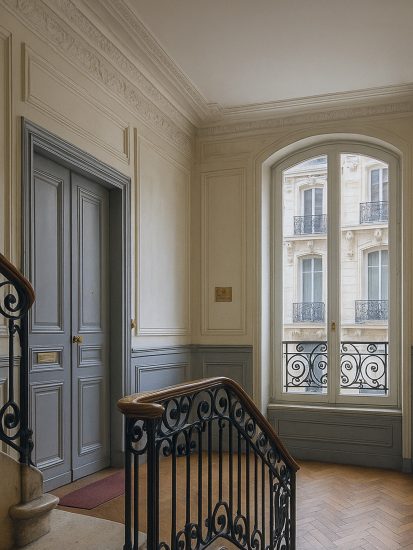
The 7th is notable for the size of its apartment stock. The Haussmannian buildings on the grand boulevards and the residential streets of the Invalides sector contain a higher proportion of large family apartments — 150m²+ floor-throughs, often with service entrances, chambre de bonne conversions, and storage cellars — than most other central arrondissements. These properties have specific maintenance demands that smaller apartments do not: more plumbing connections, more electrical circuits, larger heating systems, multiple bathroom and kitchen spaces that each require periodic attention.
For a foreign owner managing a large apartment from abroad, the complexity of the property multiplies the importance of structured, systematic inspection. A small apartment with one bathroom can be assessed in a single room-by-room walk-through. A 180m² apartment with three bathrooms, a separate kitchen with its own plumbing circuit, and a service entrance with its own access system requires a more structured inspection protocol to ensure nothing is missed.
The home watch services page describes the structured inspection programme that provides this systematic coverage, including the documentation and reporting that give foreign owners a reliable record of their property’s condition between visits.
The high-quality renovation tradition in the 7th
The 7th arrondissement has a long tradition of high-quality apartment renovation — the combination of large floor areas, excellent architectural bones, and wealthy owners who expect premium results has created a mature market for the best Parisian renovation contractors. This is good news for owners planning works: the artisan network in this arrondissement is strong, and the standard of available workmanship is high.
The corollary is that renovation costs in the 7th are correspondingly elevated. The premium charged by experienced artisans in this market reflects genuine quality — but it also means that budget estimates based on other parts of Paris will underperform. Understanding the actual cost of renovation work in the 7th before commissioning it is the management team’s role when preparing a scope and budget for a foreign owner.
For owners planning renovation works, the renovation coordination in Paris page covers the full process from planning permissions through to réception des travaux.
Frequently asked questions
Further guidance is available on the frequently asked questions page.
How does the 7th arrondissement differ from the 6th for management purposes?
The 7th is larger, more varied, and less academically oriented than the 6th. The institutional character of the ministerial streets, the riverside moisture dynamics of the Alma sector, the family apartment scale of the Invalides buildings, and the security-related access constraints near government addresses are all specific to the 7th. The 6th’s academic rental dimension, mixed-use Odéon co-ownerships, and Luxembourg premium are its own. Both arrondissements share a high standard of co-ownership management and elevated finish expectations — but the texture of the management challenges is genuinely different.
I own a large apartment in the 7th. How often should it be inspected?
For a large apartment that is not regularly occupied, monthly inspections are the appropriate baseline. The size of the property — more rooms, more systems, more potential points of failure — argues for systematic inspection rather than a quick walk-through. Properties with a history of plumbing complexity, older electrical installations, or previous water damage may warrant more frequent visits during winter months. The inspection programme is agreed at the outset and can be adjusted as the property’s specific profile becomes better understood.
Are there specific permits required for renovation works in the 7th?
The 7th arrondissement contains both protected heritage sectors and standard zones. Works that affect the exterior of the building — windows, shutters, facade — in a protected sector require review by the Architectes des Bâtiments de France. Interior works that do not affect the structure or the exterior generally do not require administrative permission beyond any co-ownership authorisation. The specific requirements for a given property depend on its location and the nature of the works planned — these should be verified before any design is finalised.
Further guidance is available on the frequently asked questions page.
How does the 7th arrondissement differ from the 6th for management purposes?
The 7th is larger, more varied, and less academically oriented than the 6th. The institutional character of the ministerial streets, the riverside moisture dynamics of the Alma sector, the family apartment scale of the Invalides buildings, and the security-related access constraints near government addresses are all specific to the 7th. The 6th’s academic rental dimension, mixed-use Odéon co-ownerships, and Luxembourg premium are its own. Both arrondissements share a high standard of co-ownership management and elevated finish expectations — but the texture of the management challenges is genuinely different.
I own a large apartment in the 7th. How often should it be inspected?
For a large apartment that is not regularly occupied, monthly inspections are the appropriate baseline. The size of the property — more rooms, more systems, more potential points of failure — argues for systematic inspection rather than a quick walk-through. Properties with a history of plumbing complexity, older electrical installations, or previous water damage may warrant more frequent visits during winter months. The inspection programme is agreed at the outset and can be adjusted as the property’s specific profile becomes better understood.
Are there specific permits required for renovation works in the 7th?
The 7th arrondissement contains both protected heritage sectors and standard zones. Works that affect the exterior of the building — windows, shutters, facade — in a protected sector require review by the Architectes des Bâtiments de France. Interior works that do not affect the structure or the exterior generally do not require administrative permission beyond any co-ownership authorisation. The specific requirements for a given property depend on its location and the nature of the works planned — these should be verified before any design is finalised.
The 7th Arrondissement, Managed from the Inside
Real Estate Caretaking has direct experience of properties across the 7th arrondissement’s main sectors — from the ministerial streets near Varenne to the riverside addresses near Alma. The team’s broader approach to property management is described on the simplifying the management of your property page.
For owners planning to purchase in the 7th, the Real Estate Caretaking assistance page outlines the buying support available. For those already managing a property here, a confidential conversation about the right level of oversight is available at any time — you are welcome to contact us directly.
Let's stay connected
Contact your agent
Real Estate Caretaking supports you every step of the way: searching, purchasing, rental management, or monitoring your second home.
A tailor-made solution for investing or living in Paris with complete peace of mind.
- +33 (0) 6 79 99 69 76
- martinehillion@gmail.com