

Owning an apartment near the Eiffel Tower occupies a specific place in the imagination of international property buyers. It is one of those addresses that requires no explanation. People understand immediately what it means — both as a location and as a statement of what the owner values about Paris.
What they understand less clearly, usually until they are already in the middle of it, is what managing that property involves when they are on the other side of the world. The 7th arrondissement is not simply a backdrop for a famous view. It is a living residential neighbourhood with its own institutional weight, its own maintenance demands, its own seasonal rhythms, and its own co-ownership culture. Managing a property here from abroad requires a local presence that understands all of these — not just the address.
This page focuses on what is specific to the management of properties in the Eiffel Tower area: the particular characteristics of the 7th arrondissement’s micro-sectors, the effects of the area’s unique environment on day-to-day management, and what foreign owners consistently encounter when they try to look after these properties without proper local support.
Real Estate Caretaking works with foreign owners throughout the 7th arrondissement, with direct familiarity with its buildings, its co-ownership landscape, and the management demands this area places on non-resident owners. The team’s broader approach to property oversight is outlined on the simplifying the management of your property page.
The 7th Arrondissement Is Not a Single Management Environment
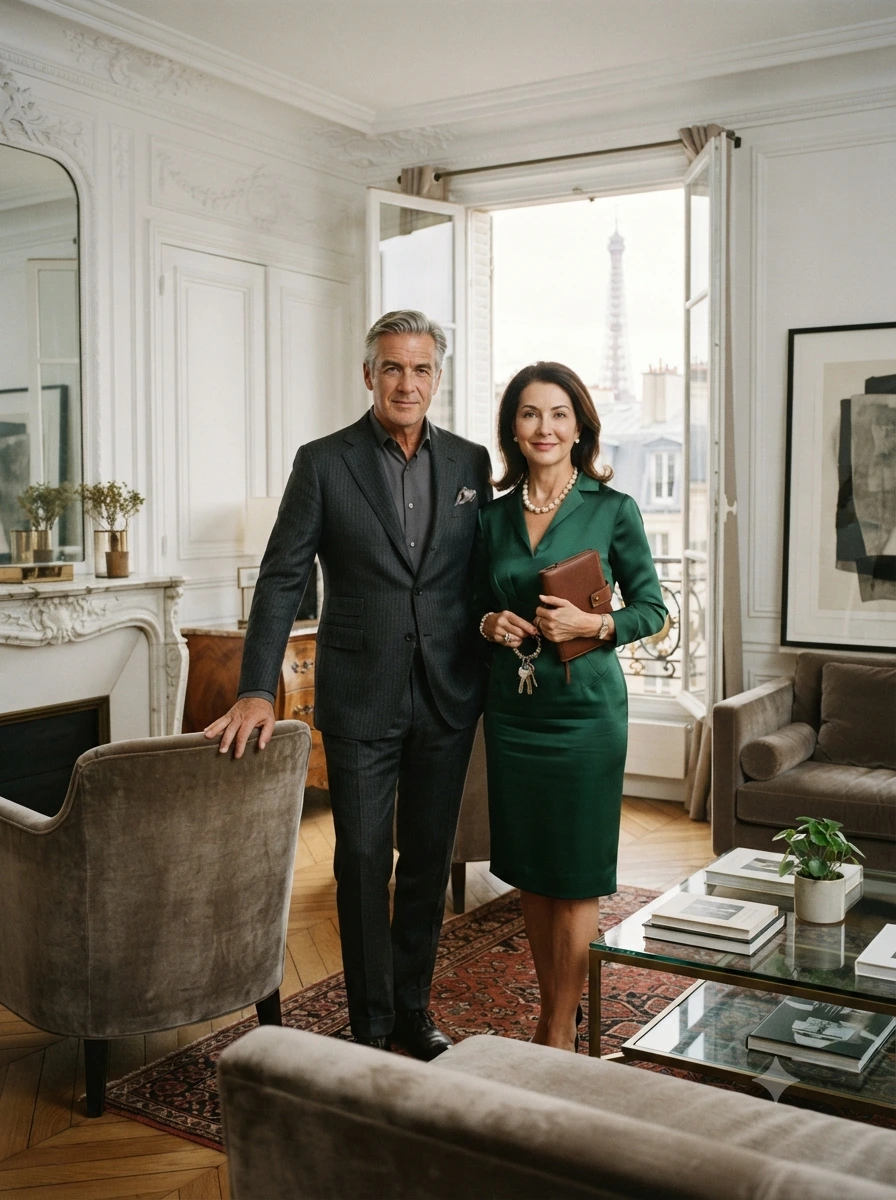
Foreign buyers and commentators often speak of the 7th arrondissement as if it were uniform — a single prestigious address. In practice, it is a large and varied arrondissement whose management characteristics differ meaningfully from one pocket to another. Understanding these differences matters for how a property is managed.
The streets immediately surrounding the Eiffel Tower and the Champ-de-Mars — particularly those in the Gros-Caillou quarter — are physically close to one of the most visited sites in the world. This proximity is the source of the address’s appeal. It is also the source of management challenges that properties ten streets away simply do not face. The Invalides area, by contrast, carries a different weight: institutional, diplomatic, insular in the way that quartiers inhabited by government ministries and international organisations tend to be. The streets near the Alma bridge and the Seine introduce the moisture dynamics of river proximity alongside the premium that these locations command.
None of these differences make any micro-sector harder to manage in absolute terms. They make them harder to manage without local knowledge — and they make the generic Paris property management approach, applied uniformly, less effective than one calibrated to where the property actually sits.
The Key Micro-Sectors Near the Eiffel Tower: A Management Overview
The table below maps the main micro-sectors of the Eiffel Tower area against their specific management characteristics for foreign owners.
| Micro-sector | Location & Streets | Key Characteristics | Management Implications |
|---|---|---|---|
| Gros-Caillou | Immediate Eiffel Tower vicinity, Rue Saint-Dominique, Rue de Grenelle lower section | Direct tourist flow on perimeter streets; some buildings with tower views; Rue Cler market proximity | Artisan access constraints during events; premium on view-facing window maintenance |
| Champ-de-Mars / École Militaire | Avenues bordering the Champ-de-Mars park, École Militaire square | Institutional presence; large family apartments; organised co-ownerships with demanding standards | Event-period access planning; formal co-ownership culture; high finish expectations |
| Invalides / Saint-François-Xavier | Around the Esplanade des Invalides, towards the 7e–15e boundary | Quieter residential streets; diplomatic community presence; excellent syndic quality | Diplomatic co-owner dynamics; high discretion expectations; strong maintenance culture |
| Alma / Pont de l'Alma | Near the river, between the 7e and 8e, Rue de l'Université upper section | Seine proximity effects; luxury market; international buyer concentration | River-related moisture monitoring; premium buyer expectations; multilingual management need |
The View as an Asset — and a Management Responsibility
Properties with a direct or partial view of the Eiffel Tower command a significant premium in the Paris market. The view is not merely aesthetic — it is a financial asset that can be the primary driver of a property’s value relative to comparable units in the same building.
What this means from a management perspective is that the surfaces through which that view is experienced — windows, French doors, balconies, terraces, bay windows — become maintenance priorities in a way that they would not be in a property whose value is less dependent on a single directional feature.
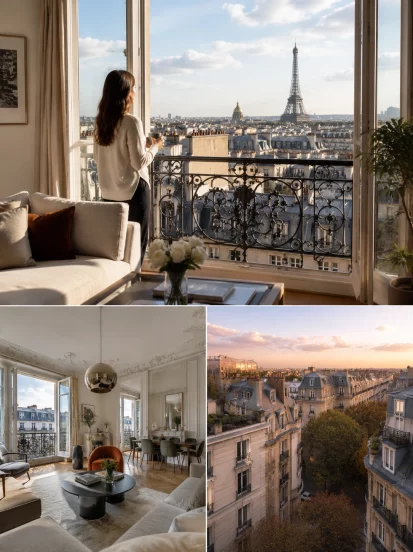
Window and glazing maintenance in view-facing apartments
A view-facing window that is functioning well is invisible. One that is not — a frame swollen by moisture that no longer opens properly, a seal that has failed and allows condensation to form between double-glazing panes, a metal latch that has corroded and sticks — becomes an immediate and obvious problem for any owner arriving at the property. In a building where the heritage regulations of the 7th may govern the profile and materials of replacement glazing, addressing these issues is not a simple swap. It requires engaging the right glazier, obtaining any necessary co-ownership or administrative approvals, and coordinating access in a building where the common areas may carry their own access protocols.
For a foreign owner who visits the property to find a stuck window and a partially obscured view, this is a disappointment. For one who is about to put the property on the rental market or prepare it for sale, it is a more significant problem — one that should have been caught and resolved during a routine inspection several weeks earlier.
Balcony and terrace oversight
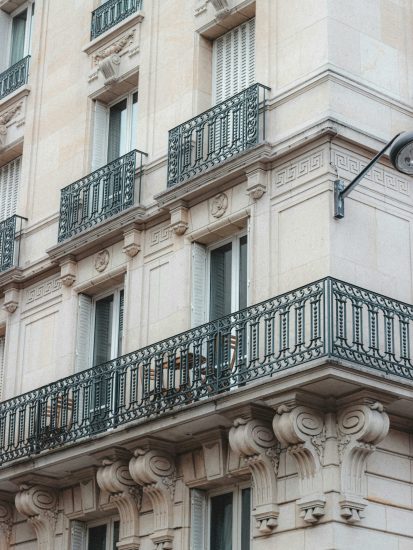
Properties in this area with balconies facing the Champ-de-Mars or with rooftop terrace access require specific management attention. Balcony railings, drainage channels, stone or tile surfaces, and the structural connections between the terrace and the building’s facade all require periodic inspection. In buildings subject to heavy tourist foot traffic on surrounding streets — which, in the Gros-Caillou sector, can mean continuous pedestrian pressure on the building’s context throughout the spring and summer — the wear on exterior elements accelerates.
Drainage is particularly consequential. A blocked balcony drain that allows water to pool against the facade, or a terrace gutter that has not been cleared since autumn, creates moisture penetration risks that are invisible until they have already caused damage to interior surfaces. Catching this during a routine visit in October costs nothing. Addressing the resulting interior damage in March costs considerably more.
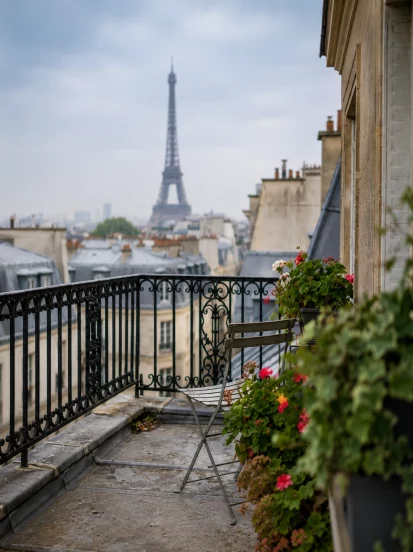
The Event Calendar as a Property Management Variable
The Eiffel Tower area is subject to a calendar of large-scale public events that has direct implications for property management. This is one of the most practically specific aspects of owning here — and one that most foreign owners never think about until it causes a problem.
What happens to artisan access during major events
The French national holiday on 14 July brings a military parade down the Champs-Élysées and a fireworks display over the Eiffel Tower that draws hundreds of thousands of people to the Champ-de-Mars and surrounding streets. The area is sealed to vehicle traffic for significant periods. Access to buildings on certain streets is controlled. Deliveries are impossible.
For a management team coordinating plumbing work, a materials delivery, or a carpentry project, the weeks around 14 July are a scheduling constraint that must be anticipated. A repair that needs to happen and is scheduled without account for this simply does not proceed. The artisan cannot park, cannot deliver materials, and in some cases cannot access the building at all from certain directions.
New Year’s Eve presents a similar, if less extreme, constraint. So do the major international summits and state visits that the 7th arrondissement hosts with some regularity, given its concentration of government buildings and the Élysée’s proximity across the river. A management team that plans works schedules around these events provides a more reliable service than one that discovers the conflict after the artisan has failed to appear.
Tourist density and its effect on building common areas
The streets immediately adjacent to the Eiffel Tower — Rue de l’Université, Avenue de la Bourdonnais, Avenue de Suffren — experience tourist foot traffic at a scale that affects the wear on building entrances, common area flooring, and facade surfaces. This is not uniform across the arrondissement: streets three blocks from the tower have a very different character from those on its perimeter.
For buildings on the highest-traffic streets, the co-ownership’s maintenance programme tends to run on a more intensive cycle for common areas — entrance hall cleaning, facade care, ironwork repainting. These cycles generate more frequent special levy calls than would be typical in a quieter Paris arrondissement, and they can arrive with timelines that require the owner to have someone monitoring the building’s correspondence.
Seasonal occupation patterns and extended vacancy
Many foreign owners in the Eiffel Tower area use their properties primarily in spring and autumn — visiting Paris when the weather is pleasant and the summer tourist peak has not yet made certain streets uncomfortable. This means that properties in this area often sit vacant through July and August, precisely when the tourist pressure on the surrounding environment is highest.
A vacant apartment in a building on a high-traffic summer street needs different surveillance attention than one on a quiet residential block. The background noise from the street, the building’s common areas under heavier use, and the physical stresses of a hot Paris summer on windows, shutters, and facades all argue for more attentive monitoring during these months — not less.
The Institutional Character of the 7th and Its Co-Ownership Implications
The 7th arrondissement contains a concentration of government ministries, diplomatic missions, and international organisations that shapes the neighbourhood’s social character in ways that are directly relevant to property management.
Co-ownerships with institutional co-owners
In some buildings in the 7th — particularly those close to government ministries or embassies — one or more of the co-ownership’s lots may be owned by an institution rather than an individual. This is not universal, but it is more common here than in most other central Paris arrondissements. An institutional co-owner — a ministry, an embassy, a foundation — behaves differently at assembly than a private individual. Their vote may be cast by a representative who has limited knowledge of the building’s specific issues, whose decisions are governed by institutional protocols rather than personal interest, and who brings a different kind of weight to collective decisions.
For a foreign private owner in a building with one or more institutional co-owners, understanding this dynamic — and having a local representative who attends assemblies and reads the room accurately — provides a level of protection that a proxy vote cannot. Knowing before an assembly that a particular resolution is likely to face institutional resistance, and briefing the owner accordingly, is the kind of granular local intelligence that is only possible with consistent on-the-ground presence.
The neighbourhood’s expectations of maintenance standards
The 7th arrondissement has a collective sense of its own standards. Buildings are expected to look maintained. Facades that are visibly deteriorating attract attention from neighbours, from the syndic, and sometimes from the arrondissement’s administrative services. This is not a problem for properties that are actively managed — it is simply a feature of the neighbourhood’s culture. But for a foreign owner whose property has been without local oversight for a period, it can become one.
A building whose facade has not been repainted within the cycle expected by the co-ownership, or whose entrance ironwork has been left to rust, creates friction with the building’s other owners that is disproportionate to the actual maintenance cost. A local representative who attends assemblies and maintains a continuous relationship with the syndic ensures that the owner is never in the position of having allowed a visible problem to persist — not because the problem could not have been addressed, but simply because no one was there to notice it.
Security protocols and access management
The concentration of high-security institutions in the 7th means that some streets and building approaches in the arrondissement operate under access protocols that are more structured than elsewhere in Paris. Contractors working in buildings near certain ministries or embassies may face vehicle access restrictions on certain days or around certain events. This is not a constant concern, but it is a periodic reality that experienced local management incorporates into planning — particularly when works requiring materials delivery or specialised equipment are being organised.
Managing a View Property for Long-Term Value
Properties near the Eiffel Tower are among the highest-value assets in the Paris residential market. Managing them well is not just a matter of keeping the apartment in good repair — it is an act of capital stewardship. The decisions made about maintenance, renovation, and presentation over time have a direct effect on the property’s value relative to its neighbours.
The maintenance premium on high-value assets
There is a consistent pattern in the Paris market: properties that have been actively and visibly maintained — where the finishes are current, the systems are in good order, and there is no deferred work to account for — achieve significantly better prices and let more easily than those where maintenance has been treated as a cost to minimise rather than an investment to make. In the Eiffel Tower area, where the baseline price per square metre is already among the highest in the city, this premium is amplified.
The converse is also true. In a market where buyers and tenants at this price point are sophisticated and have options, an apartment that shows signs of neglect — a stained ceiling, windows that stick, a terrace drain that has clearly not been maintained — raises questions about what else might be wrong. The visible details are read as indicators of the invisible ones.
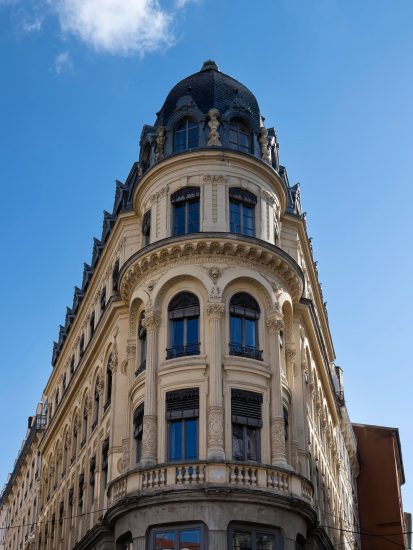
For a sense of the kinds of maintenance and improvement projects the team has overseen on behalf of foreign owners in Paris’s prestige arrondissements, the photo gallery of completed projects gives concrete examples across a range of property types and conditions.
Preparing a 7th arrondissement property for the market
When an owner decides to sell or make a property available for rental in the Eiffel Tower area, the preparation of the apartment is a management exercise in its own right. The standard expected by buyers and tenants at this price point is high — they are comparing the property directly with others in the same micro-market, and presentation matters.
A foreign owner approaching a sale or rental from abroad needs someone who can assess the property’s current condition objectively, identify what work is needed before it is presented, coordinate that work to the required standard, and ensure the apartment is photographed and presented at its best. This is a different kind of management task from routine oversight — more concentrated, more deadline-driven, and more consequential in terms of financial outcome.
Owners who are at an earlier stage — considering the purchase of a property in this area rather than managing an existing one — will find the page on choosing an experienced agent in Paris a useful starting point for understanding the acquisition process in this market.
Frequently Asked Questions
The questions below address what foreign owners of properties near the Eiffel Tower most commonly raise. Further guidance is available on the frequently asked questions page.
Does the proximity to the Eiffel Tower create specific management challenges?
Yes, in several practical ways. The most consistent is artisan access during major events — vehicle restrictions around 14 July, New Year’s Eve, and periodic state occasions can prevent works from proceeding on streets close to the tower. Tourist density on perimeter streets accelerates wear on building entrances and common areas, generating more frequent maintenance cycles in some buildings. And properties with direct views have specific glazing and balcony maintenance priorities that flow from the view being a financial asset worth protecting.
My apartment has a view of the Eiffel Tower. Does this require any specific maintenance?
The surfaces through which the view is experienced — windows, French doors, balconies — become maintenance priorities. A window that no longer opens properly, or a seal that has failed and allows condensation, directly affects the usability and presentability of the apartment’s primary asset. In buildings where heritage regulations govern replacement glazing, addressing these issues also involves navigating administrative requirements. Regular inspection of view-facing elements, with early intervention when issues develop, is the most practical approach.
How does the 7th arrondissement's institutional character affect co-ownership assemblies?
In buildings with institutional co-owners — a ministry lot, an embassy, a foundation — the assembly dynamics are different from those in purely residential buildings. Institutional representatives may vote according to protocols that do not reflect the building’s day-to-day realities, and their position on certain resolutions can be difficult to anticipate without knowing the institution’s current priorities. A local representative who attends regularly and understands the building’s specific co-ownership composition is better placed to advise the owner before a significant vote than one reviewing the agenda for the first time on the morning of the assembly.
Can works be scheduled freely in the Eiffel Tower area throughout the year?
Mostly, but with specific constraints around major events. The period around 14 July is the most consistently disruptive for properties on streets closest to the tower and the Champ-de-Mars — vehicle access is restricted, deliveries are impossible, and artisan attendance on certain streets is impractical. State visits and major summits create periodic additional constraints. A management team familiar with the area builds these considerations into works planning as a matter of course, scheduling access-dependent work for periods when the neighbourhood is operating normally.
What is the difference between the Gros-Caillou area and the Invalides area for management purposes?
The Gros-Caillou quarter — the streets immediately surrounding the Eiffel Tower — experiences tourist density effects that the Invalides area does not. Common area wear, event-period access constraints, and the specific maintenance demands of view-facing properties are more pronounced in Gros-Caillou. The Invalides area is quieter, more institutional, and characterised by co-ownerships that tend to have a more formal, more deliberate management culture. Both areas require local knowledge, but the specific priorities are different — which is why neighbourhood-calibrated management matters more than a generic Paris approach.
My property near the Eiffel Tower has been vacant for over a year. Where do I start?
With a thorough initial inspection — a baseline assessment of every room, every system, and every element of the building’s relationship to the property. This establishes what the property’s current condition actually is, rather than what it was when it was last occupied. It will typically identify deferred maintenance items, any issues that have developed during vacancy, and the state of the co-ownership’s correspondence that may have accumulated. From that baseline, the appropriate scope of ongoing management and any immediate works required can be planned clearly.
Is the 7th arrondissement management environment similar to the 6th?
They share some characteristics — Haussmannian building stock, high-value co-ownerships, premium finish expectations, a neighbourhood culture that rewards consistent maintenance — but the specific management considerations are different. The 7th’s institutional and diplomatic character, the event calendar effects near the Eiffel Tower, and the view-property maintenance dimension are specific to this arrondissement. The 6th’s moisture dynamics near the Seine and its gardien culture are specific to that one. Neighbourhood-specific management means understanding these differences, not treating both arrondissements as interchangeable Left Bank addresses.
Can the team help if I am considering selling my Eiffel Tower area property?
Yes. Preparing a property for sale in this market — assessing its current condition, coordinating the work needed before presentation, managing the preparation and presentation process — is a management exercise the team can support. The objective is to ensure the property is in the condition its address warrants when it is shown to potential buyers, rather than leaving value on the table through visible maintenance issues that could have been addressed in advance. For owners considering whether to sell or retain, the team’s knowledge of the property and the building provides useful context for that decision as well.
An Address That Deserves Proper Local Management
A property near the Eiffel Tower is one of the most recognisable addresses in the world. Managing it well from abroad — protecting its condition, its value, and its presentation — requires a local presence that knows this specific neighbourhood from the inside: its buildings, its event calendar, its co-ownership culture, and the maintenance standards its market demands.
Real Estate Caretaking works with foreign owners throughout the 7th arrondissement, with direct experience of the Gros-Caillou, Champ-de-Mars, Invalides, and Alma sectors. For American owners specifically, the page on property management in Paris for American owners addresses the US-specific context. For owners using their property as a seasonal second home, the second home management in Paris page covers the considerations specific to properties used only part of the year.
To understand the team’s approach and values, the who we are and our philosophy pages give a clear account of what Real Estate Caretaking stands for.
For a confidential conversation about your property near the Eiffel Tower and what management support would be appropriate, the team is available at any time. You are welcome to contact us directly.
For owners at an earlier stage of their relationship with the 7th arrondissement, the article Four Neighborhoods to Fall in Love with in Paris offers a portrait of the area’s character alongside three other central Paris arrondissements. The Real Estate Caretaking blog covers further topics relevant to owning and managing Parisian property as an international owner — including the article on some of our latest missions on behalf of non-resident owners, one of which involved a comprehensive renovation in the 7th arrondissement for an American family.
Let's stay connected
Contact your agent
Real Estate Caretaking supports you every step of the way: searching, purchasing, rental management, or monitoring your second home.
A tailor-made solution for investing or living in Paris with complete peace of mind.
- +33 (0) 6 79 99 69 76
- martinehillion@gmail.com