

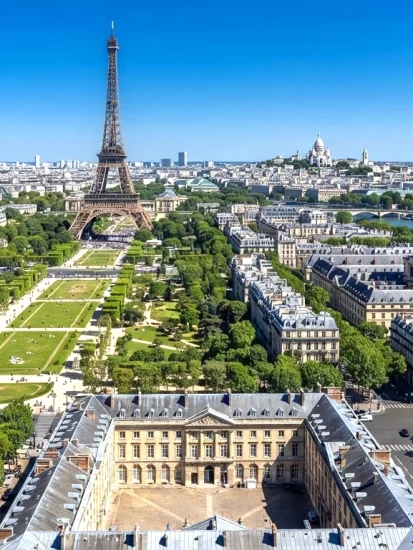
The 16th arrondissement occupies a particular place in Parisian real estate — one that is not always well understood by foreign buyers who encounter it for the first time. It is the largest arrondissement within the city boundaries, stretching from the Trocadéro and its river views to the residential depths of Auteuil and the Bois de Boulogne. It contains some of the most architecturally significant apartment buildings in Paris — the Art Nouveau and Art Déco heritage of Hector Guimard, Henri Sauvage, and Auguste Perret is concentrated here in a way that is unique in the city.
It is also an arrondissement defined by its family residential character. The 16th is where Parisian families with the means to choose have lived for generations — in large, well-maintained apartments in buildings that were designed for permanence, owned co-operatively by people who regard the building’s quality as a matter of personal and collective pride. Managing a property here as a foreign owner means understanding this culture and operating within it.
What It Means for Management
Art Nouveau and Art Déco buildings: beautiful but demanding
The 16th arrondissement contains the highest concentration of early twentieth-century architectural heritage in Paris outside of specific listed monuments.
The buildings designed by Hector Guimard in the Auteuil sector — with their ceramic facades, organic ironwork, and handcrafted detail — are among the most distinctive residential properties in the city. The Art Déco buildings of the Trocadéro area represent a different but equally specific architectural vocabulary: reinforced concrete structures with elaborate decorative stone, bronze hardware, and bespoke interior finishes.
For property owners, this architectural distinction has direct maintenance implications. The ceramic tiles on a Guimard facade cannot be replaced with standard modern materials without destroying the building’s integrity — and its listed or registered status means that any exterior works require heritage-compliant materials and ABF review. The bronze hardware in an Art Déco building needs a metalworker who understands patination and the difference between conservation cleaning and destructive polishing. The stained glass panels in a building’s stairwell need a glazier with restoration experience, not a standard window contractor.
These are not exotic requirements — they apply to a significant proportion of the 16th’s most desirable residential buildings. A management team without specific experience of this building stock will consistently appoint the wrong artisan for works that require specialist knowledge. The result, in the best case, is work that is technically adequate but aesthetically inappropriate; in the worst case, it is irreversible damage to a heritage element that reduces the property’s value and creates a dispute with the co-ownership.
The Bois de Boulogne adjacency and its management implications
Properties in the western part of the 16th — particularly those in Auteuil and the streets that back onto or overlook the Bois de Boulogne — benefit from an extraordinary residential setting. They also face specific management considerations that properties further from the park do not.
Ground moisture from the park’s water table affects the basement and lower-floor conditions of buildings on streets adjacent to the Bois. Trees on or near the property create leaf accumulation in gutters and drainage channels that requires more frequent clearing than in the interior of the city. Pest management — insects and rodents that move between the park and the urban fabric — is a more active maintenance concern than in arrondissements without adjacent woodland. These are not dramatic problems, but they are consistent ones that a management programme calibrated to this part of the 16th needs to address systematically.
The 16th Arrondissement's Co-Ownership Culture
Buildings where the co-owners know each other
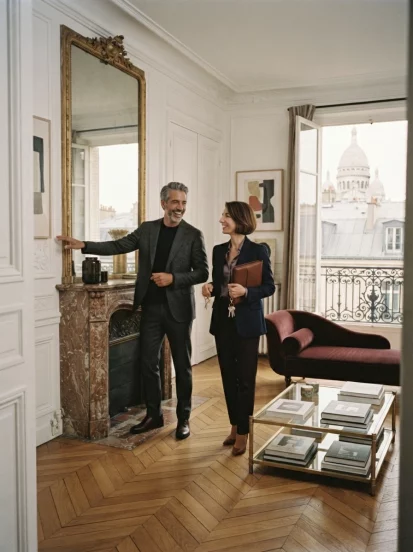
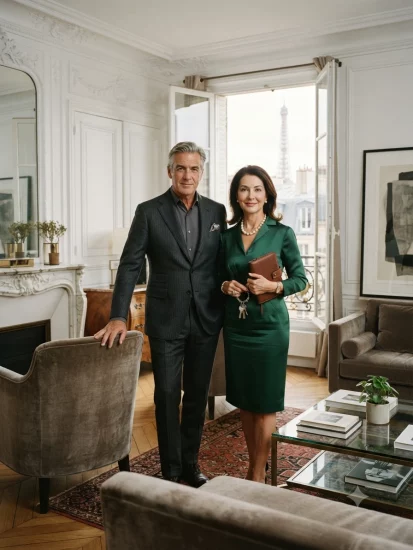
In the 16th’s multigenerational residential buildings, the co-ownership is not an administrative abstraction. The members of the assemblée générale frequently know each other personally. Decisions about the building are discussed with genuine investment. The syndic is held to account by a membership that remembers what was promised at the previous assembly and expects to see it delivered at the next.
For a foreign owner who does not attend assemblies, this creates a social reality that matters. An owner who is never represented — who never appears, never votes, never raises a concern — becomes the building’s least-considered interest. In a well-engaged co-ownership, this absence can result in decisions that serve the majority’s preferences at the expense of the absent owner’s, without any bad faith on anyone’s part. It is simply the consequence of not being present when things are decided.
Having a local representative who attends assemblies, knows the building’s members, and is known to them is a different proposition from submitting a proxy vote by post. The team’s approach to relations with the condominium in buildings of this type reflects the importance of genuine presence rather than formal participation alone.
Maintenance votes and the capital works cycle
Buildings in the 16th tend to be maintained to a high standard — which means they tend to vote significant capital works more regularly than buildings where deferred maintenance is the norm. Facade restoration programmes, roof replacement, lift modernisation, common area refurbishment: these are periodic expenses in any well-maintained Parisian building, and the financial calls they generate can be substantial.
For a foreign owner, advance warning of upcoming capital works decisions is one of the most valuable things a local management arrangement provides. Understanding that a facade restoration is likely to be proposed at the next assembly — and having the budget context to assess whether the proposed contractor and cost are appropriate — allows the owner to participate in the decision rather than simply receive the financial consequence of it.
Property Management in the 16th Arrondissement
| Topic | Details |
|---|---|
| Arrondissement | 16th (Trocadéro, Passy, La Muette, Auteuil, Bois sectors) |
| Dominant building stock | Art Nouveau (Guimard), Art Déco, high-quality Haussmannian; some modernist residential |
| Heritage characteristics | Significant heritage listing and registration; ABF review applies to exterior works in many buildings |
| Co-ownership culture | Multigenerational family ownership; high engagement; strong institutional memory in assemblies |
| Bois de Boulogne effects | Ground moisture, leaf accumulation, pest management more active in western streets |
| Typical apartment profile | Large family apartments — 120–200m²+ not uncommon; service entrances, storage caves, chambre de bonne |
| Typical foreign owner | International families, established Franco-American households, Gulf buyers — primarily long-term residential use |
What Foreign Owners Consistently Discover in the 16th
The specialist artisan requirement is more acute here than almost anywhere else
The 16th’s architectural heritage means that the wrong artisan for a heritage building causes visible and sometimes irreversible damage. The ceramic tile specialist, the Art Déco bronze conservator, the parqueteur who understands pre-war floor construction: these are trades that a generic management team does not have in its network and cannot source on demand. Building these relationships requires years of active presence in the arrondissement’s property market.
For a foreign owner planning any works that touch a heritage element of their property, the first question is not ‘what does it cost?’ but ‘who is qualified to do it correctly?’ The answer to the second question determines the answer to the first — and getting it wrong creates a cost that is typically higher than the original work would have been if correctly specified from the outset.
The family apartment’s maintenance complexity
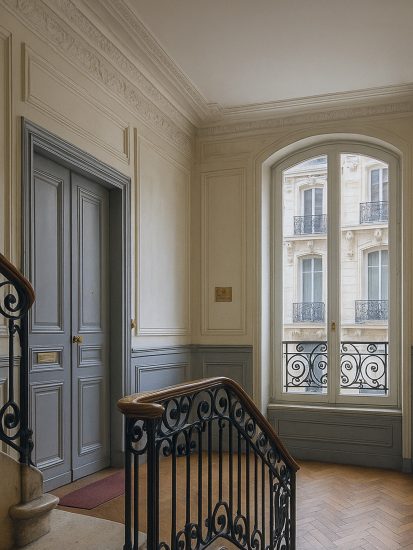
A 180m² apartment in a 16th arrondissement building has more maintenance complexity than its size alone suggests. Multiple plumbing circuits serving multiple bathrooms. An electrical installation that may combine original Haussmannian or inter-war wiring with partial updates from various decades. A heating system that serves a large floor area and needs calibration to work efficiently. A service entrance with its own access system, its own locks, and its own relationship to the co-ownership’s common areas.
Structured, systematic inspection of a property this size — covering every room, every system, every point of potential failure in a documented sequence — is the management approach that catches issues at the right moment. Ad hoc visits that cover the obvious things and assume the rest is fine are not adequate for properties of this complexity.
Frequently asked questions
Further guidance is available on the frequently asked questions page.
Is the 16th arrondissement a good choice for a foreign investor?
The 16th is primarily a residential arrondissement rather than an investment one in the short-term rental sense. The buildings, the co-ownerships, and the neighbourhood’s culture are oriented toward long-term residential use by families and established residents. Foreign buyers who purchase here are typically looking for a genuine family base in Paris, a prestige second home, or a long-term asset in one of the city’s most consistently well-maintained residential environments. The management implications of this orientation are significant — the property needs to be maintained to the standard of the building and the neighbourhood, not to a rental yield standard.
My building in the 16th has a Guimard facade. What does this mean for maintenance?
A Guimard building is almost certainly listed or registered as a heritage building (inscrit or classé). Any works affecting the exterior — including repair or replacement of ceramic tiles, ironwork, windows, or any facade element — require notification to and approval from the Architectes des Bâtiments de France. The materials and techniques used must comply with heritage standards. The process takes longer and costs more than standard exterior works, but the result — if done correctly — preserves the building’s heritage value and the individual apartment’s position within it.
I am buying a large apartment in the 16th. How do I plan for ongoing management?
The starting point is a thorough initial audit of the property’s condition — every system, every room, every element of the co-ownership documentation. This establishes the maintenance baseline and identifies any deferred work that needs addressing before the ongoing management programme begins. For a large apartment in this market, planning the management relationship at the same time as planning the purchase — rather than after a problem has developed — is the approach that produces the best outcomes.
The Real Estate Caretaking assistance page explains how the team supports buyers from the search stage through to post-purchase management.
Further guidance is available on the frequently asked questions page.
Is the 16th arrondissement a good choice for a foreign investor?
The 16th is primarily a residential arrondissement rather than an investment one in the short-term rental sense. The buildings, the co-ownerships, and the neighbourhood’s culture are oriented toward long-term residential use by families and established residents. Foreign buyers who purchase here are typically looking for a genuine family base in Paris, a prestige second home, or a long-term asset in one of the city’s most consistently well-maintained residential environments. The management implications of this orientation are significant — the property needs to be maintained to the standard of the building and the neighbourhood, not to a rental yield standard.
My building in the 16th has a Guimard facade. What does this mean for maintenance?
A Guimard building is almost certainly listed or registered as a heritage building (inscrit or classé). Any works affecting the exterior — including repair or replacement of ceramic tiles, ironwork, windows, or any facade element — require notification to and approval from the Architectes des Bâtiments de France. The materials and techniques used must comply with heritage standards. The process takes longer and costs more than standard exterior works, but the result — if done correctly — preserves the building’s heritage value and the individual apartment’s position within it.
I am buying a large apartment in the 16th. How do I plan for ongoing management?
The starting point is a thorough initial audit of the property’s condition — every system, every room, every element of the co-ownership documentation. This establishes the maintenance baseline and identifies any deferred work that needs addressing before the ongoing management programme begins. For a large apartment in this market, planning the management relationship at the same time as planning the purchase — rather than after a problem has developed — is the approach that produces the best outcomes.
The Real Estate Caretaking assistance page explains how the team supports buyers from the search stage through to post-purchase management.
The 16th Arrondissement, Understood from the Inside
Real Estate Caretaking has direct experience of the 16th arrondissement’s specific building types, co-ownership cultures, and artisan networks. For foreign owners whose property requires the level of care that this arrondissement’s heritage buildings demand, the luxury property management page describes the high-value management approach applicable to the most complex and valuable properties.
For a confidential conversation about your property in the 16th, you are welcome to contact us directly at any time. The team’s values and approach are described on the who we are and our philosophy pages.
Let's stay connected
Contact your agent
Real Estate Caretaking supports you every step of the way: searching, purchasing, rental management, or monitoring your second home.
A tailor-made solution for investing or living in Paris with complete peace of mind.
- +33 (0) 6 79 99 69 76
- martinehillion@gmail.com