Most Americans who buy property in Paris have already fallen for the city. They know it from holidays, from years of return visits, from a long-standing attachment to a particular street or a particular way of spending a morning. The question they eventually face is more specific: which part of Paris is actually right for them as a buyer?
It is a question that looks simple from a distance and becomes considerably more nuanced up close. Each arrondissement has its own character, its own building stock, its own mix of co-ownership structures and maintenance realities, and its own market dynamics. The neighbourhood that feels perfect on a two-week visit may present unexpected considerations once you start thinking about remote ownership, building management, or the practical logistics of a property you will occupy only part of the year.
This guide is not a travel editorial. It is written for American buyers who are thinking seriously about a Paris purchase — what each of the main neighbourhoods offers, what distinguishes them from a real estate perspective, and what to keep in mind if you plan to own from abroad.
If you are at an earlier stage of your search, the team’s approach to searching for a property in Paris and the importance of choosing an experienced local agent are worth reviewing before you begin.
What American Buyers Typically Look For in Paris
American buyers in Paris tend to share a few common priorities, even when their backgrounds and budgets differ considerably.
Walkability matters enormously. The ability to step outside and reach a bakery, a market, a café, and a park on foot — without a car — is part of what makes Paris appealing to buyers from cities like New York or Boston, and even more so to those from Los Angeles or Miami who are accustomed to driving everywhere. Nearly all of central Paris delivers on this, but some arrondissements do so more naturally than others.
Security and building quality are consistent concerns. American buyers often prioritise well-maintained Haussmannian buildings with a functioning gardien or a responsive syndic — partly for practical reasons, and partly because these buildings tend to hold their value and present fewer surprises over time.
International connectivity matters too. Properties within reasonable distance of Charles de Gaulle or Orly, with easy access to the RER or metro, are preferable for owners who travel frequently. Most of the arrondissements covered here are well-served, but proximity to major transport hubs varies.
Finally, many American buyers are purchasing a second home or pied-à-terre, not a primary residence. This means that the ease of managing the property remotely — the building’s administrative culture, the responsiveness of the local tradespeople, the quality of the syndic — factors into the decision as much as the apartment itself.
For a clear picture of what the acquisition process involves, the Real Estate Caretaking assistance page explains how the team supports buyers at each stage.
The Neighbourhoods Most Chosen by American Buyers
The 7th Arrondissement — Prestige, Calm, and Understated Elegance
The 7th is, for many American buyers, the benchmark against which other arrondissements are measured. It is the address of ministries, embassies, and long-established French families — and it has attracted generations of affluent international buyers for precisely these reasons.
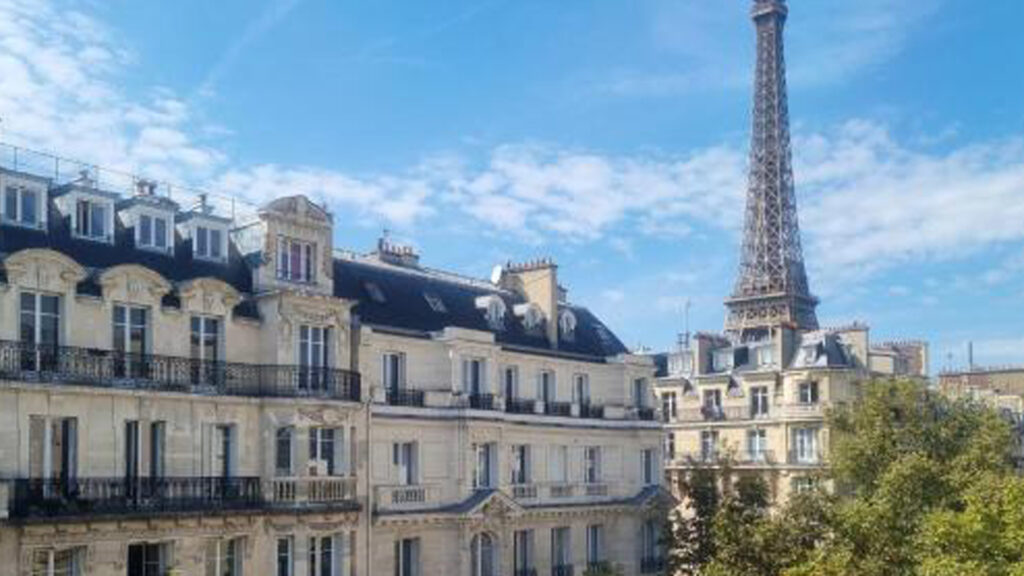
The property stock is dominated by classic Haussmannian apartments: high ceilings, parquet floors, generous proportions, and views that sometimes take in the Eiffel Tower or the Champ-de-Mars. Buildings here tend to be well-managed, with functioning elevators, attentive building managers, and syndics that take their responsibilities seriously. For owners who will be absent for extended periods, this matters considerably.
The 7th is quiet — notably so by Parisian standards. There is very little nightlife, which makes it attractive to buyers seeking a calm residential environment. Streets like Rue Cler and Rue Saint-Dominique offer the kind of daily market life — cheesemongers, wine merchants, boulangeries — that American buyers often describe as the essence of what they came for.
The trade-off is price. The 7th arrondissement is among the most expensive addresses in Paris, and the supply of properties coming to market is limited. Buyers who find the right property here tend to move quickly, which makes having an established local relationship — and a clear sense of what you are looking for — particularly important.
Saint-Germain-des-Prés (6th Arrondissement) — Literary History and Left Bank Refinement
The 6th is the arrondissement that carries the most powerful mythology for American buyers — and not without reason. The streets around Saint-Germain-des-Prés have been a magnet for American writers, artists, and intellectuals since the early twentieth century. For buyers who feel a personal connection to that history, owning here has a particular resonance.
From a real estate perspective, the 6th offers a mix of classic Parisian apartment buildings, some of the most beautiful streets on the Left Bank, and immediate proximity to the Luxembourg Gardens. The property types range from studios and one-bedroom apartments — popular with buyers looking for a manageable pied-à-terre — to large family flats with high ceilings and formal dining rooms.
The neighbourhood’s architecture, culture and daily life are covered in detail in an existing article on the site: Four Neighbourhoods to Fall in Love with in Paris — which also covers the 7th, the Marais, and the Île Saint-Louis for buyers wanting a broader cultural sense of each area.
Co-ownership structures in the 6th vary considerably. Some buildings are meticulously managed; others, particularly older ones, have more complex histories. An experienced local agent will know which buildings have well-run syndicates and which have accumulated deferred maintenance — information that is rarely visible from the listing alone.
Le Marais (3rd and 4th Arrondissements) — History, Character, and Cosmopolitan Energy
Le Marais attracts a different profile of American buyer: typically younger, comfortable with a more animated urban environment, and drawn to the neighbourhood’s mix of medieval architecture, contemporary galleries, and international atmosphere.
The real estate in the Marais is genuinely distinctive. Because the neighbourhood largely escaped Haussmann’s renovations, it retains an urban fabric that predates the 19th century — cobbled courtyards, converted private mansions known as hôtels particuliers, and buildings whose character bears no resemblance to the standard Parisian apartment block. This is part of the appeal; it is also part of what makes due diligence particularly important.
Older buildings in the Marais may have complex co-ownership histories, aging infrastructure, and restoration requirements that are not always reflected in the asking price. Buyers should ensure they have access to the full co-ownership documentation — the carnet d’entretien, the procès-verbaux of recent general assemblies, and the building’s current maintenance plan — before proceeding.
For buyers who intend to use the property regularly and do not mind a livelier environment, the Marais offers real rewards: central location, strong international community, excellent transport connections, and the kind of architectural character that is genuinely difficult to find elsewhere.
Île Saint-Louis (4th Arrondissement) — Rarity, Serenity, and Exceptional Exclusivity
The Île Saint-Louis is in a category of its own. The island occupies a central position in the Seine, within walking distance of Notre-Dame and the Marais, yet its atmosphere is almost entirely removed from the pace of central Paris. The streets are narrow, the buildings uniformly historic, and the population small enough that residents recognise one another.
Properties here are genuinely rare. The island’s building stock is fixed — there is no new development, and apartments rarely change hands. When they do come to market, they tend to attract buyers who have been looking for years and are prepared to act decisively. Prices are among the highest per square metre in Paris, and the properties are typically apartments carved from 17th-century private mansions.
For the right buyer — one who values absolute calm, exceptional architecture, and a sense of owning something that cannot be replicated — the Île Saint-Louis represents a compelling case. For those who need regular availability and a degree of flexibility in their search, it may be more realistic to keep this as a longer-term aspiration.
The Palais-Royal Area (1st Arrondissement) — Central, Refined, and Underappreciated
The 1st arrondissement is perhaps less discussed among American buyers than it deserves to be. The area around the Palais-Royal garden, the Place Vendôme, and the Rue de Rivoli offers a concentration of some of the finest addresses in Paris — within walking distance of the Louvre, the Tuileries, and the Opéra — in a neighbourhood that is quieter and more residential than its central location might suggest.
The property stock here leans toward prestige apartments and pied-à-terres in well-maintained buildings. The buildings themselves are often impressive — carved stone facades, grand entrances, and apartments with the kind of proportions that reflect their original construction for wealthy Parisian families. Supply is limited, which means buyers need to be well-prepared when the right property appears.
For buyers considering this area, it is worth noting that the 1st is also home to some of Paris’s most complex co-ownership situations — particularly in buildings that have undergone multiple subdivisions over the centuries. A thorough review of the co-ownership documentation, ideally with local professional support, is essential before any commitment.
The Batignolles (17th Arrondissement) — Residential Authenticity at a More Accessible Entry Point
For American buyers whose budget does not stretch to the most prestigious Left Bank addresses, or who are looking for more space than the same budget would buy in the 6th or 7th, the Batignolles quarter of the 17th arrondissement merits serious consideration.
This is a neighbourhood that has developed a strong residential identity over the past two decades. The area around the Square des Batignolles and the weekly organic market on Boulevard des Batignolles has attracted a community of families, professionals, and international buyers who want a genuine Parisian neighbourhood feel without paying the premium of the most sought-after arrondissements.
The property mix is more varied than in the traditional prestige areas: Haussmannian buildings sit alongside more recent constructions, and it is possible to find larger apartments — three or four bedrooms — at prices that would buy a studio in the 7th. For buyers who plan to spend significant time in Paris and need practical space, this can be a more pragmatic choice.
The 17th is well-connected by metro and train, and the proximity to the Gare Saint-Lazare and its express train links to Charles de Gaulle airport is a practical consideration for buyers who travel frequently between Paris and the United States.
Neighbourhood Comparison at a Glance
The table below summarises the key characteristics of each neighbourhood from a buyer's perspective. Price levels are relative to the Paris market and should not be taken as precise figures; the property market evolves continuously, and any specific transaction will depend on the individual property and its condition.
| Neighbourhood | Property Types | Price Level | Availability | Character |
|---|---|---|---|---|
| 7th arrondissement | Haussmannian apartments, family flats | Very High | Very Low | Quiet, diplomatic, prestigious |
| Saint-Germain (6th) | Classic apartments, literary addresses | Very High | Low | Cultural, elegant, walkable |
| Le Marais (3rd/4th) | Lofts, converted mansions, studios | High | Moderate | Historic, cosmopolitan, lively |
| Île Saint-Louis (4th) | Rare historic apartments, mansions | Extremely High | Very Low | Exclusive, quiet, village feel |
| Palais-Royal (1st) | Prestige apartments, pied-à-terres | Very High | Low-Moderate | Central, refined, cultural |
| Batignolles (17th) | Mixed stock, new builds, larger flats | Moderate-High | Moderate | Residential, relaxed, authentic |
What to Consider Before Choosing a Neighbourhood
How much time will you spend in the property?
An owner who visits Paris four or five times a year has different priorities from one who plans to spend several months there. Buyers who will be present regularly may weight proximity to specific amenities — a particular market, a gym, friends who live nearby — more heavily than those for whom the property will sit vacant for long stretches. In the latter case, the building's management quality and the ease of remote oversight matter more than the specific street.
What is your tolerance for building complexity?
Some of the most architecturally distinctive properties in Paris — particularly in the Marais and on the Île Saint-Louis — come with co-ownership structures that are more complex than those found in standard Haussmannian buildings. This is not a reason to avoid them, but it is a reason to be thorough. Understanding the building's maintenance history, its current financial situation, and the upcoming works already voted at general assemblies is essential before any purchase.
The glossary of real estate terms on the Real Estate Caretaking website explains French co-ownership concepts that are frequently misunderstood by international buyers — including tantièmes, charges de copropriété, and the role of the syndic.
How will the property be managed when you are not there?
This is a question that many buyers address only after they have already committed to a purchase — which is too late to factor it into the decision. The neighbourhood and the building you choose will directly affect how manageable remote ownership turns out to be. A well-run building with a responsive syndic and a clear maintenance protocol is considerably easier to look after from abroad than one where communications are irregular and decisions opaque.
For owners concerned about what happens between visits, the approach to simplifying the management of your property is worth understanding early in the buying process — not as an afterthought once the purchase is complete.
Have you accounted for the full cost of ownership?
The purchase price is the most visible figure, but French property ownership involves a number of ongoing costs that should be factored into any realistic budget: taxe foncière (property tax), annual co-ownership charges (charges de copropriété), the cost of periodic special levies for building works, home insurance, and — for buyers who engage a local management service — those fees as well. It is strongly advisable to consult both a French notaire and a tax advisor familiar with Franco-American tax treaties before completing any purchase, as your obligations on both sides of the Atlantic will depend on your specific situation.
Finding the Right Neighbourhood for Your Paris Purchase
The decision about where to buy in Paris is not one that should be rushed, and it rarely is. Most American buyers who end up owning here have visited the city repeatedly, considered several neighbourhoods, and refined their thinking over time before committing. That process benefits from having informed, experienced guidance at hand — someone who knows the buildings, not just the postcodes.
Real Estate Caretaking works with American and international buyers from the earliest stages of their search through to completion and long-term property management. If you are at the beginning of this process, you may also find the team’s article on how they help buyers acquire their apartment in Paris a useful starting point.
For a confidential discussion about your project — whether you are actively searching or simply beginning to think seriously about a Paris purchase — you are welcome to contact the team directly. And for owners who have already completed a purchase and are thinking about what comes next, the assistance with your move page explains the practical support available once the keys are in hand.
To stay informed on topics relevant to owning and buying property in Paris, the Real Estate Caretaking blog covers a range of subjects of interest to non-resident and international owners on a regular basis.