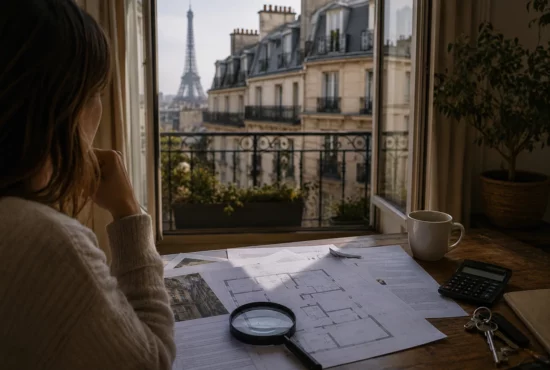

The idea of a pied-à-terre in Saint-Germain-des-Prés is one of those things that sounds impossibly romantic from a distance and rather more complicated up close. The apartment you are imagining — small, perfectly positioned, a few blocks from the Luxembourg Gardens, with a view over a Haussmannian courtyard — exists. The process of finding it, buying it, and then actually owning it involves decisions that reward careful thinking well in advance of the purchase.
This article is a practical guide for international buyers — particularly those coming from the United States — who are considering a pied-à-terre in this specific neighbourhood. It covers what to look for, what the process involves, and what ongoing ownership actually requires when you are not in Paris most of the year.
Why Saint-Germain-des-Prés for a Pied-à-Terre
The walk-through apartment and the pied-à-terre format
Saint-Germain-des-Prés is one of the few central Paris neighbourhoods where a genuine range of apartment sizes exists within the same buildings. A Haussmannian immeuble on the Rue de Vaugirard or the Rue Notre-Dame-des-Champs may contain studios and chambres de bonne conversions alongside larger floor-throughs. This variety makes it possible to enter the neighbourhood at a pied-à-terre scale without being pushed into buildings or streets that feel secondary.
The neighbourhood’s consistent quality of building management — professional syndics, gardiens still present in many of the better buildings, a co-ownership culture that maintains standards — means that a small apartment in a well-run building here is a fundamentally different proposition from a studio in a building that has been allowed to drift.
The Luxembourg Gardens as a non-negotiable amenity
For buyers looking for a pied-à-terre, the proximity to the Luxembourg Gardens is not a luxury — it is a specific quality of life that is almost impossible to replicate anywhere else in central Paris at this scale. A 35m² apartment within walking distance of 23 hectares of gardens, fountains, and public space is an address that punches significantly above its square metreage.
This proximity is reflected in prices, which are among the highest in the 6th arrondissement — itself among the most expensive in Paris. Buyers who are budget-sensitive within the arrondissement will generally find better value in the Saint-Sulpice sector or the streets near Mabillon than in the immediate vicinity of the Gardens.
The neighbourhood that has not changed the way others have
Saint-Germain-des-Prés retains a character that has been surprisingly consistent over decades. The famous cafés are still there — changed from the existentialist literary scene of the 1950s, certainly, but still present, still functioning. The publishing houses and booksellers, though fewer than they were, still define the neighbourhood’s identity. The streets are quiet at night in ways that the Marais, which has become a destination neighbourhood, is not.
For a buyer who will use the apartment a few weeks a year and wants it to feel like an arrival in a specific, consistent Paris rather than a generic central location, Saint-Germain-des-Prés delivers on that expectation in a way that is genuinely distinctive.
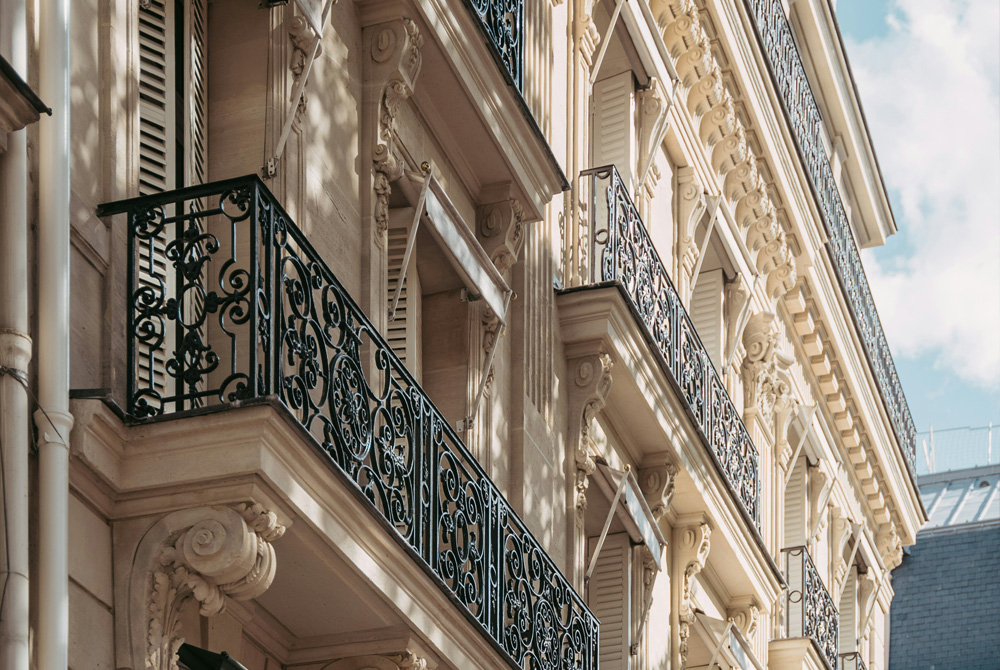
What the Search for a Pied-à-Terre in Saint-Germain Actually Involves
Supply is limited and turnover is slow
The 6th arrondissement is a neighbourhood where properties are held, not traded. The owners are financial stable enough that they are not forced sellers, and many properties pass between family members or long-standing professional networks rather than coming to the open market. The result is that the publicly advertised supply at any given moment is a small fraction of the actual stock, and the properties that do appear on the market often move quickly.
For a buyer who is searching from the United States — who cannot be in Paris for a viewing at 48 hours’ notice — this supply dynamic is a real constraint. Having a local professional who can attend viewings on your behalf, provide an honest assessment of properties before you spend money on flights, and alert you to properties that have not yet been advertised is a significant advantage.
The page on searching for a property with Real Estate Caretaking explains how the team supports international buyers through the search process.
The due diligence specific to a pied-à-terre purchase
When buying a small apartment in a large Haussmannian building, the due diligence on the co-ownership is at least as important as the due diligence on the individual apartment. The carnet d’entretien tells you whether the building has been properly maintained or whether deferred works are accumulating. The procès-verbaux of recent general assemblies tell you what has been voted and what financial obligations are coming for all co-owners. The building’s financial health — its provision fund, its outstanding debts — determines what surprise levies you might face in the first years of ownership.
A pied-à-terre buyer who falls in love with the apartment and pays insufficient attention to the building is taking a risk that is invisible at the moment of purchase and visible in the years that follow.
The full due diligence checklist for non-resident buyers is covered in the guide to buying property in Paris as a non-resident.
Financing a pied-à-terre from abroad
Many buyers of pied-à-terres in this price bracket purchase in cash — the transaction is simpler, the timeline is faster, and the French mortgage market for non-residents carries conditions (conservative loan-to-value ratios, extensive documentation requirements) that can make borrowing more trouble than it is worth for smaller purchases. For buyers who do want to borrow, the process is workable but requires a French lender with international client capability, and the documentation needed to satisfy the lender’s requirements for foreign-source income is substantial.
Regardless of the financing approach, the funds will need to clear in France before the signing of the acte authentique, and the notaire will require documentation of the source of funds in compliance with French anti-money-laundering regulations.
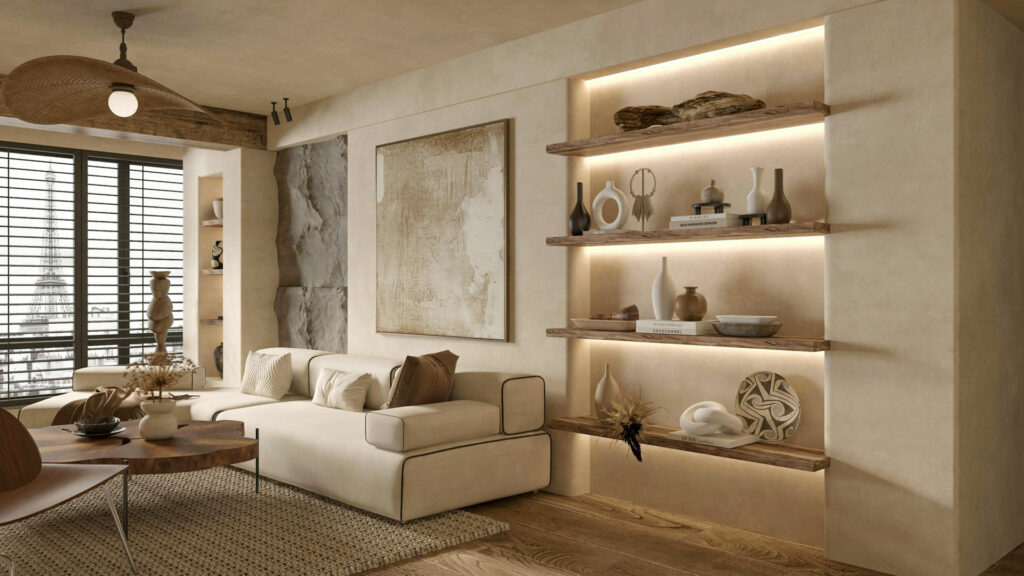
After the Purchase: Owning a Pied-à-Terre in the 6th from Abroad
The apartment that sits empty for most of the year
A pied-à-terre is, almost by definition, a property that spends most of its time unoccupied. In Saint-Germain-des-Prés, where the buildings are well-maintained and the co-ownerships are engaged, the building will continue to function in your absence. But the apartment itself will not look after itself.
Humidity accumulates without ventilation. Window seals that are not periodically checked deteriorate. Pipe joints that are not flushed through occasionally dry out. The condition that the apartment was in when you left it is not, six months later, the condition it is in when you return — unless someone has been checking it in the interim.
The home watch services page describes the inspection programme that maintains the baseline during extended absences. The specific management characteristics of the 6th arrondissement — the gardien relationship, the moisture considerations near the Seine, the standard expected in a premium building — are covered on the property management in Saint-Germain-des-Prés page.
The syndic and the general assembly
A pied-à-terre owner in the 6th is still a co-owner with all the rights and obligations that entails. The syndic will send correspondence — in French — about the building’s affairs. General assemblies will be called, agendas distributed, votes taken. Capital works will be proposed and voted, creating financial obligations for all co-owners.
For a buyer who is primarily in Paris for two or three weeks a year, engaging with this administrative dimension of ownership requires either a deliberate effort to stay current with the building’s communications or a local representative who monitors this on your behalf.
The broader administrative picture of what owning a Paris apartment from abroad actually requires — beyond the apartment itself — is covered in the guide owning a Paris apartment from abroad.
The pre-arrival question
The best version of owning a pied-à-terre in Saint-Germain-des-Prés is arriving to find everything exactly as you expected it: the apartment aired, the heating set, all systems working, the building quiet outside. The worst version is arriving late at night after a transatlantic flight to find the boiler has not lit, there is a drip under the bathroom sink, and the nearest plumber you can find will not be available until Thursday.
The difference between these two experiences is a local team that has been to the apartment before your arrival, checked everything, and dealt with what needed dealing with. It is a simple concept and a significant practical difference.
The Real Estate Caretaking concierge services page describes this dimension of the service in detail.
A Final Observation
A pied-à-terre in Saint-Germain-des-Prés is one of the more considered things a person can buy. The neighbourhood will not change dramatically. The address will remain what it is. The building, if well-chosen, will be managed by people who take their responsibilities seriously. What the owner adds to this is a local management arrangement that protects the investment during the months when they are not there — and ensures that each visit begins exactly as it should.
For a confidential conversation about searching for or managing a pied-à-terre in the 6th arrondissement, the team is available at any time. You are welcome to contact us directly.
Tags
Related Articles