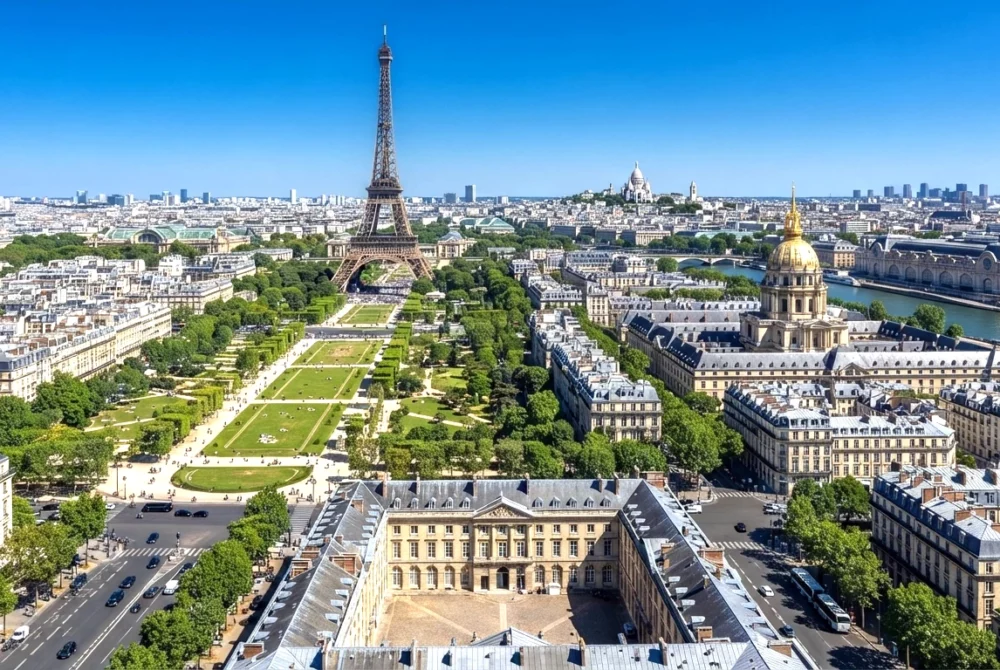
Le Marais, Saint-Germain-des-Prés, and the 7th arrondissement are not interchangeable prestige addresses. They are distinct urban environments that produce distinct daily experiences, attract different kinds of owners, and have different implications for the practical reality of owning property from the United States. Choosing between them on the basis of price per square metre or proximity to a landmark misses the more important question: which one actually fits the way you want to use Paris?
This article is a side-by-side comparison organised around lived experience rather than investment criteria. It is written for buyers who have narrowed their search to these three areas and want to understand the real differences — including what each choice means for managing the property from abroad.
For a broader overview of Paris neighbourhoods for American buyers, the article best neighborhoods in Paris for American buyers covers six areas including these three from an investment and lifestyle angle.
Le Marais: Paris at Its Most Layered and Alive
The daily experience
A morning in the Marais begins with a choice that most Paris neighbourhoods do not offer: which market, which coffee, which route through history. The Rue de Bretagne covered market is a few minutes from most addresses. The Place des Vosges — the oldest planned square in Paris, completed in 1612 — is reachable on foot from virtually anywhere in the neighbourhood. Turn down a side street and you may find a seventeenth-century courtyard, a contemporary gallery, and a falafel counter within a hundred metres of each other.
The Marais is alive in a way that is urban and immediate. It is not a neighbourhood for those who want Paris to feel like a retreat. Weekends bring significant pedestrian traffic from the rest of the city and from tourism. The cafés and restaurants are full. The streets, particularly around the Rue de Bretagne and the Rue des Archives, have the energy of a neighbourhood that is genuinely used by the people in it — not just photographed.
Evenings in the Marais are social. The concentration of bars, restaurants, and cultural venues within a small geographic area means that the neighbourhood stays animated later than Saint-Germain or most of the 7th. For buyers who want Paris to feel metropolitan and alive during their stays, this is part of the appeal.
Who feels at home here
The Marais draws buyers who have a specific relationship to urban energy: people who spent formative years in Brooklyn, the West Village, or comparable neighbourhoods that combine history with a genuinely active street-level culture. It attracts those who want to walk from their door to a gallery opening, who value international community, and who are comfortable in an environment that is architecturally unconventional.
It tends not to suit buyers looking for residential calm, consistent quiet at night, or the kind of formal Haussmannian elegance that defines the western arrondissements. The Marais is not serene. Its buildings are irregular and older than most of Paris. Its character is one of productive, layered complexity rather than composed beauty.
The ownership implication
The buildings of the Marais — many of them constructed before Haussmann’s nineteenth-century transformation of Paris — are architecturally compelling and practically more demanding than standard Haussmannian blocks. Pre-Haussmannian plumbing, irregular co-ownership structures carved from converted private mansions, heritage protections that require ABF review for any exterior works: these are not dealbreakers, but they mean that managing a Marais property from abroad requires local knowledge specific to this building type.
The management considerations specific to the Marais — including the heritage constraints and co-ownership complexity — are covered in detail on the property management in Le Marais page.
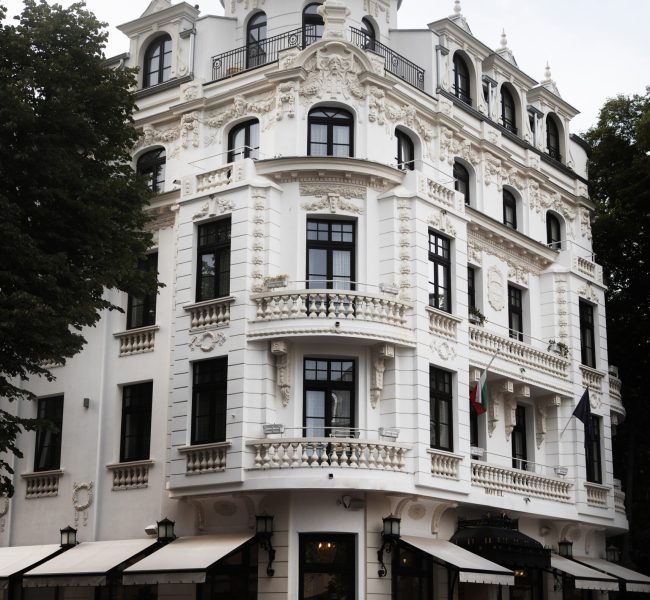
Saint-Germain-des-Prés: The Left Bank That Remains Itself
The daily experience
Saint-Germain-des-Prés has a quality that is unusual in a major world city: it has remained, in its essentials, recognisable across decades. The famous cafés are still there. The bookshops — fewer than they were, but still present — still define the streets around the Odéon and the Rue de l’Odéon. The Luxembourg Gardens, a short walk from almost any address in the 6th, provide the kind of open space that urban living rarely delivers at this scale and this quality.
A morning in Saint-Germain has a pace that is deliberately unhurried. The neighbourhood does not reward rushing. The food shops on the Rue de Buci, the flower sellers at the corner of the Rue de Seine, the bookstalls on the quai a walk away: these are pleasures that require the willingness to move slowly. For buyers who use their Paris apartment as a genuine retreat — a place to decompress, to read, to think — Saint-Germain provides the conditions for this in ways that the Marais does not.
Evenings here are quieter than in the Marais. The neighbourhood has excellent restaurants but not the density of bars and late venues that gives the Marais its nocturnal energy. By ten o’clock on most evenings, the streets near the Luxembourg Gardens are genuinely quiet.
Who feels at home here
Saint-Germain draws buyers who have a specific idea of what Paris should feel like: elegant, literary, unhurried, with a built environment of consistent quality and a daily life organised around pleasures that are calm rather than stimulating. It attracts those who want to arrive at their apartment after a long flight and feel, within a few hours, that they have genuinely arrived somewhere — not just at another urban address.
It suits buyers who will use the property for longer stays rather than rapid visits: those who want to establish a rhythm in the neighbourhood, to have regular spots, to become recognisable to the shopkeeper and the café owner. For buyers whose Paris trips are short and intense, the neighbourhood rewards that use less than one that has more to offer at high density.
The ownership implication
Saint-Germain’s Haussmannian buildings are generally well-documented and professionally managed. The co-ownership culture in the better buildings is engaged and expects participation from all co-owners. Moisture management near the Seine is a specific consideration for lower-floor apartments on certain streets. And the standard of finish expected in this market means that a property that is not actively maintained to the neighbourhood’s standard is visible in ways that a similar property in a less premium environment would not be.
The specific management considerations for properties in the 6th arrondissement — including the gardien relationship, the humidity dimension near the river, and the premium finish standard — are described on the property management in Saint-Germain-des-Prés page.
The 7th Arrondissement: Prestige, Space, and Institutional Calm
The daily experience
The 7th arrondissement is the neighbourhood that most consistently surprises first-time visitors who have only seen it from the outside. From the perspective of a tourist standing at the Champ-de-Mars, the 7th appears to be primarily a backdrop for the Eiffel Tower. From the perspective of someone living on the Rue de Varenne or the Rue Saint-Dominique, it is something quite different: one of the most consistently pleasant residential environments in Paris.
The streets away from the tower and the Champ-de-Mars are quiet in ways that are unusual for a central arrondissement. The Rue Cler market — a short, pedestrianised street with food shops, a wine merchant, a fromagerie, a café — produces on a weekday morning the particular experience of neighbourhood daily life that visitors to Paris imagine and rarely find. The buildings are large. The apartments are generous. The streets are wide enough that they feel spacious rather than compressed.
There is an institutional weight to the 7th that the Marais and Saint-Germain do not have. Ministries, embassies, and government departments line several of its principal streets. This gives the neighbourhood a kind of civic seriousness — not cold, but composed. The 7th takes its own character seriously.
Who feels at home here
The 7th attracts buyers who want Paris to feel both accessible and grown-up — where daily life is organised around quality rather than novelty, where the neighbourhood community is stable and established, and where the apartment itself is large enough to genuinely live in rather than camp in. It is the natural choice for families who use Paris for extended stays and want space, for buyers who have moved on from the energy of the Marais and want something quieter, and for those who value the combination of central location and genuine residential calm.
It tends not to suit buyers looking for a small, affordable pied-à-terre — the 7th’s apartments are predominantly large and the price per square metre reflects this. Nor does it suit those who want the urban density of experience that the Marais provides. The 7th’s pleasures are slower and steadier.
The ownership implication
The 7th’s buildings are among the best-maintained in Paris, and the co-ownership culture in the better buildings reflects this. For owners near the Eiffel Tower, the event calendar — particularly the July 14 period — creates specific artisan access constraints that need to be planned around. For owners in the quieter residential streets of the Invalides sector or the Rue de Varenne corridor, the management environment is more predictable and the co-ownership culture is consistently professional.
The management considerations for the full 7th arrondissement — beyond the Eiffel Tower sector — are covered on the property management in the 7th arrondissement page. The Eiffel Tower area’s specific considerations — tourist density, event access, view-property maintenance — are on the property management near the Eiffel Tower page.
Side by Side: The Three Neighbourhoods at a Glance
- The table below summarises the key differences across the dimensions that matter most for American buyers choosing between these three areas.
| Comparison | Le Marais | Saint-Germain-des-Prés | 7th Arrondissement |
|---|---|---|---|
| Building stock | Pre-Haussmannian buildings, converted mansions and irregular layouts. | Haussmannian buildings with uniform layouts and generally good maintenance. | Haussmannian buildings, large family apartments and some institutional properties. |
| Neighbourhood feel | Cosmopolitan, lively, historic and rich in gallery culture. | Elegant, literary, discreet and generally quiet. | Calm, prestigious, diplomatic and family-oriented. |
| Daily life | Walkable market streets, cafés and galleries; a bustling atmosphere. | Luxembourg Gardens, food shops and bookshops; a relaxed pace. | Green spaces, village-like surroundings near Les Invalides and quiet streets. |
| Property types | Lofts, courtyard flats, mezzanines and historic mansion studios. | Studios to large floor-through apartments and occasional pied-à-terre properties. | Large family apartments, fewer small units and premium prices per m². |
| Management complexity | High: heritage rules, complex co-ownerships and courtyard access. | Moderate: professional property managers and often an on-site concierge. | Moderate to high: large apartments and possible event-related access constraints. |
| Price level | High | Very high | Very high |
| Best for | Culture seekers, urban lifestyle enthusiasts and historic architecture buyers. | Those seeking quiet elegance, a pied-à-terre or the classic Left Bank atmosphere. | Families, prestige-address buyers and long-term owners. |
Le Marais
- Building stock
- Pre-Haussmannian buildings, converted mansions and irregular layouts.
- Neighbourhood feel
- Cosmopolitan, lively, historic and rich in gallery culture.
- Daily life
- Walkable market streets, cafés and galleries; a bustling atmosphere.
- Property types
- Lofts, courtyard flats, mezzanines and historic mansion studios.
- Management complexity
- High: heritage rules, complex co-ownerships and courtyard access.
- Price level
- High
- Best for
- Culture seekers, urban lifestyle enthusiasts and historic architecture buyers.
Saint-Germain-des-Prés
- Building stock
- Haussmannian buildings with uniform layouts and generally good maintenance.
- Neighbourhood feel
- Elegant, literary, discreet and generally quiet.
- Daily life
- Luxembourg Gardens, food shops and bookshops; a relaxed pace.
- Property types
- Studios to large floor-through apartments and occasional pied-à-terre properties.
- Management complexity
- Moderate: professional property managers and often an on-site concierge.
- Price level
- Very high
- Best for
- Those seeking quiet elegance, a pied-à-terre or the classic Left Bank atmosphere.
7th Arrondissement
- Building stock
- Haussmannian buildings, large family apartments and some institutional properties.
- Neighbourhood feel
- Calm, prestigious, diplomatic and family-oriented.
- Daily life
- Green spaces, village-like surroundings near Les Invalides and quiet streets.
- Property types
- Large family apartments, fewer small units and premium prices per m².
- Management complexity
- Moderate to high: large apartments and possible event-related access constraints.
- Price level
- Very high
- Best for
- Families, prestige-address buyers and long-term owners.
Which Neighbourhood Fits Your Paris?
Choose Le Marais if…
You want Paris to feel alive and unexpected. You are comfortable in buildings that are architecturally irregular and older. You value a cosmopolitan, international community and the density of cultural life within walking distance. You are not looking for quiet evenings or a retreat from urban energy. You accept that the management of an older building with heritage protections requires local expertise specific to this building type.
The Marais rewards buyers who engage with Paris as a city rather than as an address. If what draws you to Paris is the café culture, the galleries, the sense of walking through history rather than just looking at it — the Marais delivers this more directly than anywhere else in central Paris.
Choose Saint-Germain-des-Prés if…
You want Paris to feel like a genuine retreat. You use your apartment for longer, slower stays rather than short, intense visits. You are drawn to the specific character of the Left Bank — the literary atmosphere, the proximity to the Luxembourg Gardens, the sense that the neighbourhood has remained itself across time. You are comfortable with premium property management expectations and the active maintenance standard that the 6th’s market demands.
Saint-Germain is the neighbourhood for buyers who have a specific idea of what Paris means to them — and who want that idea to be confirmed every time they arrive. It is not a neighbourhood that changes much. That consistency is precisely the point.
Choose the 7th if…
You want space, calm, and the combination of prestige address and genuine residential quality. You plan to use the apartment for extended stays with family, or you want an apartment large enough to feel like a home rather than a pied-à-terre. You value a stable residential community and a building environment that is professionally managed and predictably maintained. You are comfortable with the 7th’s scale — both in terms of the apartments it offers and the price per square metre it commands.
The 7th is often the neighbourhood that buyers settle on after having considered and visited the others. It is not always the first choice, but it is frequently the final one — the neighbourhood that turns out to offer the particular combination of quality, space, and Parisian seriousness that buyers were looking for without quite knowing it.
A Note on Managing Each of These Properties from Abroad
All three neighbourhoods require active local management for non-resident owners. But the nature of that management differs.
In the Marais, the specific challenge is the building type: older fabric, complex co-ownerships, heritage constraints, and access logistics that require established local relationships. The right management team has specific experience of pre-Haussmannian buildings and the Marais’s particular administrative landscape.
In Saint-Germain, the challenge is the standard: a premium neighbourhood expects properties to be maintained at a premium standard, and the gap between what is adequate in a less expensive arrondissement and what is expected here is real. Humidity monitoring near the Seine and gardien relationship management are considerations specific to this environment.
In the 7th, the scale of the apartments adds maintenance complexity, and the event calendar near the Eiffel Tower creates periodic access constraints. The co-ownership culture in the better buildings is engaged and expects consistent participation from all co-owners, including absent ones.
For American owners specifically, the page on property management in Paris for American owners explains how a structured local management arrangement addresses these considerations — regardless of which of these three neighbourhoods your property is in.
For owners who want to understand the full range of services available — from routine oversight to emergency response — the team’s approach is described on the Real Estate Caretaking assistance page.
For a conversation about a specific property you are considering in any of these areas, the team is available for a confidential discussion at any time. You are welcome to contact us directly.
Tags
Related Articles